Metallized PET Film for Insulated Delivery Bags
Oct 17,2026 | FOSHAN CAILONG METALLIC PACKAGING MATERIAL CO.,LTD
Metallized PET Film may be evaluated as a reflective layer in an insulated delivery bag, but a bright silver face does not establish the bag's thermal performance. The finished construction includes padding, closures, seams and repeated folding. A material decision should identify what the existing bag fails to do and which layer is responsible.
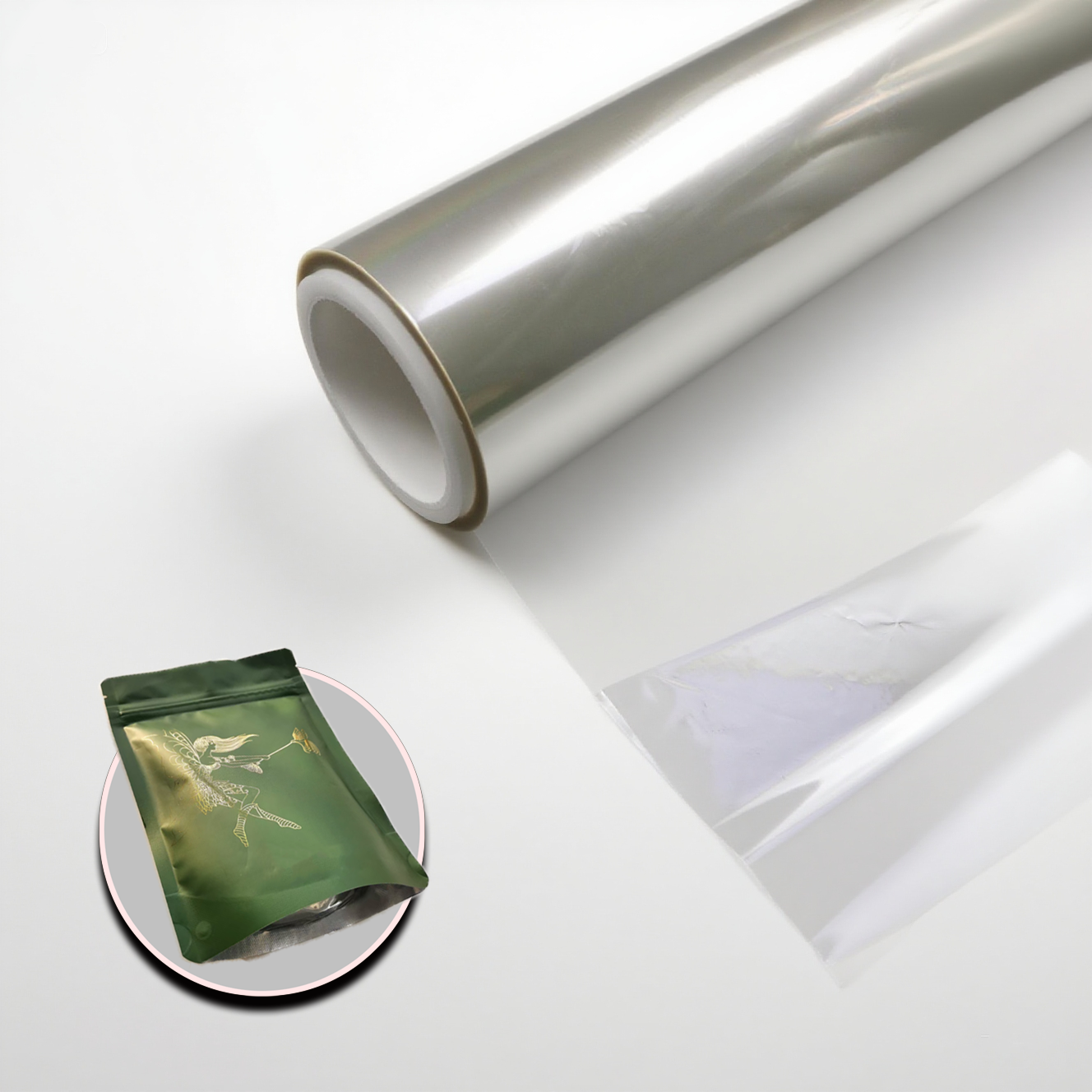
Cailong lists VPET-GF02 as a double-sided aluminum-metallized BOPET film with reflective appearance and packaging applications. A Metallized Film Supplier can discuss that film as a laminate component. The listing does not provide a confirmed delivery-bag temperature-retention result, so the proposed use remains a candidate requiring whole-bag testing.
Distinguish the reflective face from the insulating body
Start with a section through the present bag. Identify the outer fabric or film, padding, inner facing and any protective layers. The metallized film is one part of that construction. It must not be credited with the thickness, cushioning or support supplied by a foam or other insulating layer.
Ask whether the complaint concerns rapid product-temperature change, damaged lining, poor cleaning or a closure that does not stay shut. Those problems can occur together, but a new silver facing need not solve all of them. A bag with an incomplete closure deserves a different investigation from one whose lining fails at a fold.
What double-sided Metallized PET Film changes
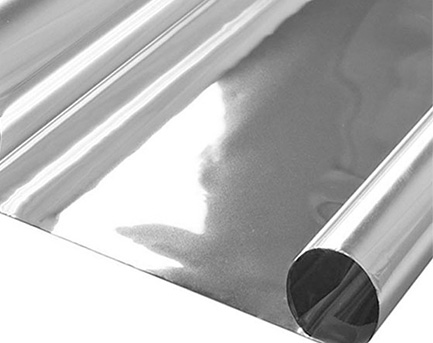
VPET-GF02 has aluminum deposited on both faces of a BOPET substrate. That construction creates metal-bearing interfaces on both sides. It is therefore important to identify which face is bonded, which is exposed, and whether the selected design needs a protective layer over the surface that encounters handling.
A possible trial stack is a cleanable protective facing / compatible bonding layer / double-sided metallized PET / adhesive / insulating support. This is an illustrative arrangement, not a validated delivery-bag laminate. The designer must decide whether the protective facing, bonding layers and actual interface geometry serve the intended thermal and cleaning functions.
Do not assume that depositing metal on both sides doubles insulation or provides a predictable advantage over a single-sided product. The supplier's appearance and adhesion descriptions do not answer that question. Compare the actual constructions under a defined bag test, and obtain relevant thermal-surface data if the design depends on them.
Seams are both assembly features and damage locations
A delivery bag may be stitched, welded, bonded or assembled using several methods. Record which layers each operation penetrates or joins. A seam can expose edges, constrain movement and concentrate folding. It should be included in the sample construction rather than left out of a flat-laminate comparison.
If the lining tears near a seam, inspect the cut edge, seam allowance and local support. A film that performs adequately across the broad panel can still be unsuitable at an unsupported edge. Adding a protective facing or changing the local assembly may be more relevant than selecting a different visible metallic finish.
Include corners and closure flaps when evaluating repeated use. Folding a loose strip does not reproduce a reinforced corner that bends against a seam or a flap pulled by a fastener. Identify where the bag actually changes shape during loading, carrying and storage, then assess those locations deliberately.
Keep food contact and cleaning requirements separate
Determine whether the delivery bag carries closed primary packs or whether its lining can directly contact food. A general packaging-film listing is not sufficient to decide suitability for the latter. The responsible customer must confirm the contact requirements for the complete facing, including any protective coating or adhesive exposed by the design.
Cleaning introduces another material interface question. Use the actual permitted detergent, wiping method and drying procedure in the evaluation. Inspect edges, folds and seams after cleaning as well as the central panel. A reflective face that looks intact does not prove that its supporting bond has remained satisfactory.
Compare bag performance under matching loading
Use the same bag dimensions, loading arrangement and closure procedure when comparing a candidate with the incumbent. Record the initial condition of the contents, the surrounding environment and the observation period. Without matching those inputs, a difference in measured product temperature cannot be assigned confidently to the new film.
Choose measuring positions relevant to the actual load. A reading taken only near the lining may tell a different story from the condition at the center of a packed container. The delivery operation should define the useful acceptance measurement. Do not translate a film brochure property into a promised delivery duration or a food-storage instruction.
Test the bag after representative handling if reuse is part of the brief. The first-use construction and the folded, cleaned construction may no longer be identical. Connect any change in performance with observed seam damage, delamination or closure movement instead of recording only a final temperature result.
Include flat storage between delivery rounds if that is how the bag is used. A repeated storage fold can put the same lining region under stress before the next load is inserted. Inspect that crease together with the neighboring padding and any reinforcement. It may explain a localized failure that a broad reflective-surface inspection misses.
Choose an alternative by the identified failure
If the incumbent uses aluminum foil, compare how the complete foil laminate and metallized-PET laminate respond to folding and attachment. If it uses another metallized film, establish whether the proposed double-sided construction adds a useful function. Neither comparison supports a blanket statement that deposited aluminum and foil are thermally or mechanically equivalent.
Send Cailong the current bag section, joining method, lining damage photographs and thermal assessment procedure. Include the cleaning requirement and intended reuse pattern. A VPET-GF02 trial can then be directed at a specific reflective-laminate question while the finished bag remains the boundary for any delivery-performance claim.
Comment