Ultra-High Barrier PET Film Supplier Guide
Aug 20,2026 | FOSHAN CAILONG METALLIC PACKAGING MATERIAL CO.,LTD
A low film quotation does not reduce packaging cost if barrier varies between rolls, the aluminum layer transfers during lamination, or the supplier cannot reproduce an approved grade. Selecting an ultra-high barrier PET film supplier therefore requires more than comparing a headline OTR value. Procurement teams need grade-specific test conditions, adhesion data, roll-quality controls, converting samples, traceability, and a reliable supply plan. The objective is a finished laminate that protects shelf life consistently—not merely an attractive laboratory data sheet.
Start With the Package Requirement
Define the product’s sensitivity to oxygen, moisture, light, and aroma. State the expected shelf life, package area, storage climate, filling process, and distribution route. Coffee, tea, chocolate, dehydrated foods, spices, electronics, and cosmetics do not impose the same barrier or mechanical demands. A supplier can recommend a useful grade only when the end use and the rest of the laminate are clear.
Translate the requirement into targets for the finished package. Film OTR and WVTR are useful inputs, but seams, seals, flex cracking, pinholes, gussets, valves, and closures can dominate total ingress. Leave margin for conversion and distribution rather than selecting a film whose laboratory value only just meets the theoretical calculation.
Compare Grade-Specific OTR and WVTR
The published VPET-GZ series uses a 12 micrometer PET base. Under the stated ASTM F1249 method, selected grades list typical WVTR limits from 1.0 down to 0.3 g/m²·24 h. Under ASTM D3985, selected grades list typical OTR limits from 1.0 down to 0.1 cc/m²·24 h. These values vary by grade and test conditions; they are not a universal guarantee for every roll or finished pouch.
Ask the supplier to identify the exact grade, units, conditioning, temperature, humidity, specimen orientation, and acceptance rule. If the requirement is critical, agree whether the purchase specification uses a guaranteed limit or a typical reference value. Then measure the laminate after printing, adhesive curing, slitting, pouch making, and representative flexing.
Do Not Ignore Aluminum-Layer Adhesion
A high incoming barrier value can lose commercial meaning if the metal layer transfers or delaminates during conversion. The VPET-GZ series publishes aluminum-layer adhesion values of at least 1.5, 2.0, or 2.5 N/15 mm depending on grade, using the supplier’s stated method. The same series lists optical density of at least 2.5. Buyers should compare the method, failure mode, and grade—not just the largest number.
Run the actual ink and adhesive system. Inspect where failure occurs: within the adhesive, at the ink interface, at the metal layer, or in the substrate. Verify bond after full cure and after relevant heat, humidity, flex, and storage exposures. A supplier should help distinguish a film-interface problem from an adhesive-mixing, coating, drying, or tension problem.
Evaluate the Supplier Beyond the Data Sheet
Request certificates of analysis tied to grade and production lot.
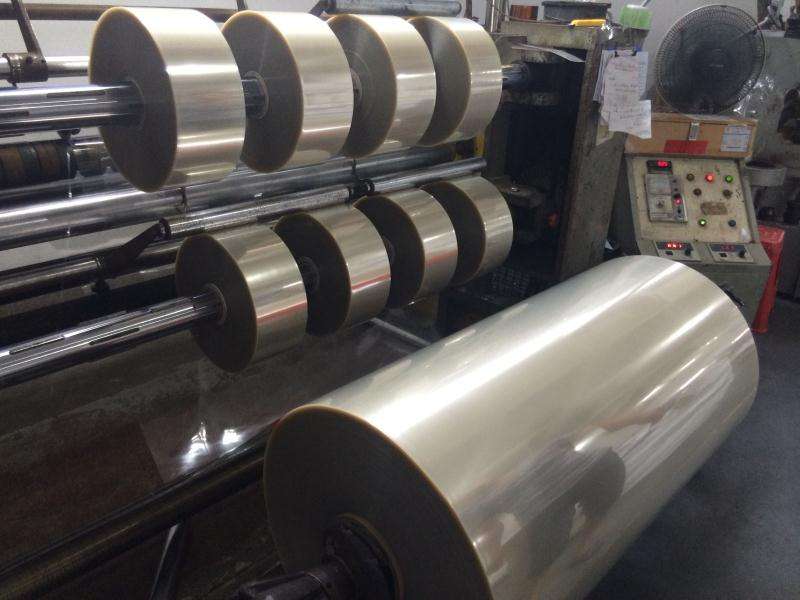
Confirm thickness, width tolerance, roll length, core, winding direction, splice policy, and packaging.
Ask how optical density, barrier, adhesion, and surface treatment are sampled across the web and between rolls.
Review complaint handling, retained samples, root-cause support, and change-notification procedures.
Trial more than one production lot when barrier consistency is critical to shelf life.
Confirm standard widths, minimum order quantity, lead time, forecast process, and contingency capacity.
Compare Metallized PET With Aluminum Foil
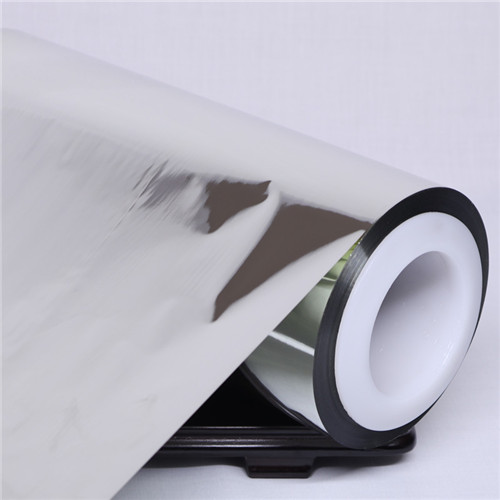
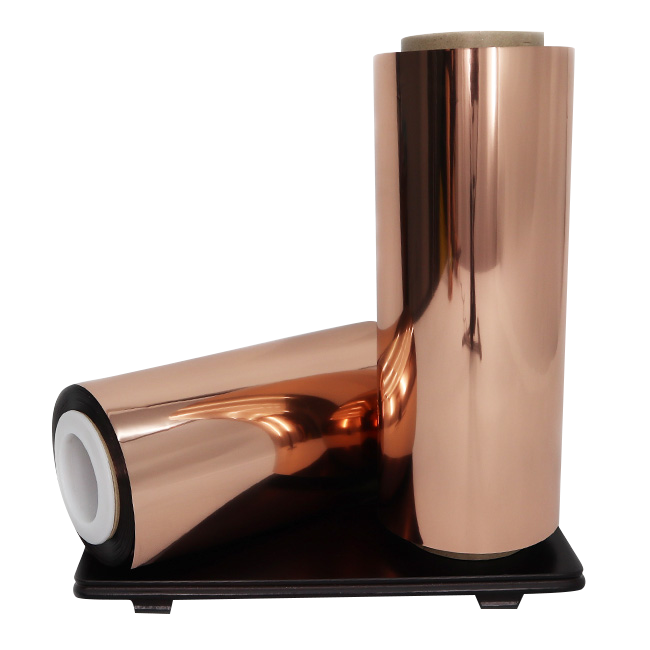
Metallized PET can be considered when a package needs strong barrier with lower material weight, polymer-film flexibility, and a metallic appearance. Aluminum foil may still be preferred where maximum light, oxygen, and moisture protection, dead fold, or established process performance is essential. Metallized PET should not be sold as a universal foil replacement.
Compare complete structures at equal functional performance. Include film and adhesive cost, yield, line speed, scrap, roll handling, seal performance, puncture resistance, flex durability, shelf-life results, and supply risk. A lower price per kilogram can be misleading if the structure needs more layers or creates more rejected packs.
Trial the Complete Laminate
A common development route places the metallized PET as the barrier and printing web with a compatible sealant layer selected for the product and filling process. The exact structure must be validated by the converter. Protect the metal layer inside the laminate when abrasion or product contact could damage it. Confirm print orientation, treatment side, adhesive compatibility, seal temperature window, hot tack, and pouch integrity.
Use filled-package tests, not only flat-film tests. Depending on the application, include leak, burst, drop, compression, flex, transport, and real-time or validated accelerated shelf-life work. If the finished pack misses its target, separate permeation through the web from seal leakage, closure leakage, and mechanical damage before changing grades.
Commercial Questions for an RFQ
An effective RFQ identifies the application, current structure, target grade or performance range, annual volume, order pattern, widths, roll dimensions, delivery location, and required documents. Ask which values are typical and which are guaranteed. Define sample quantity and acceptance tests before discussing a long-term contract.
Supply reliability matters because a barrier-film change often requires renewed shelf-life and line qualification. Confirm whether the approved grade and manufacturing route will remain stable, how changes are communicated, and what backup plan exists. Keep retained rolls or sheets from qualification lots and link them to finished-package results.
FAQ
Should the lowest OTR grade always be purchased?
No. Select enough barrier margin for the package, then balance adhesion, converting durability, availability, and cost. Better film OTR cannot compensate for leaking seals or damaged folds.
Can supplier data predict final shelf life?
It supports screening, but final shelf life depends on the laminate, package geometry, product, headspace, seals, closures, processing, storage, and distribution. Test the filled package.
How many lots should be qualified?
The answer depends on risk, but more than one representative production lot is prudent when small barrier or adhesion changes could affect product loss or customer complaints.
Conclusion
An ultra-high barrier PET film supplier should provide reproducible grades, transparent test conditions, converting support, traceability, and stable delivery. Review the verified Ultra-High Barrier PET Metallized Film page, request the relevant VPET-GZ grade, and qualify it in the complete laminate and filled package.
Comment