PVC Metallized Film (VMPVC) – High Gloss Vacuum Metallized PVC for Labels, Decoration & Packaging |Cailong
Jun 17,2026 | FOSHAN CAILONG METALLIC PACKAGING MATERIAL CO.,LTD
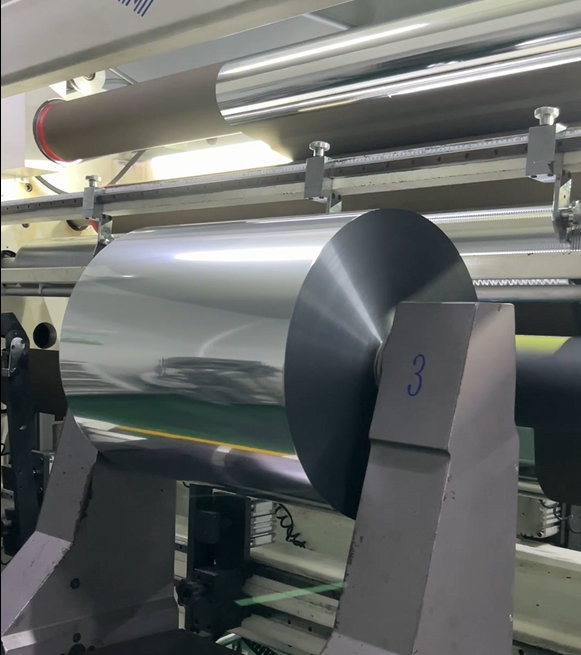
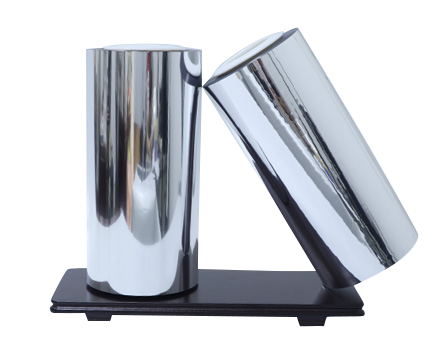
When your project calls for a bright metallic finish combined with easy processing, low cost, and reliable barrier performance, vacuum metallized PVC film (VMPVC) often delivers what heavier substrates cannot. Whether you are producing luxury gift boxes, self-adhesive labels, or cigarette packaging inserts, VMPVC offers a unique balance of aesthetics, machinability, and affordability.
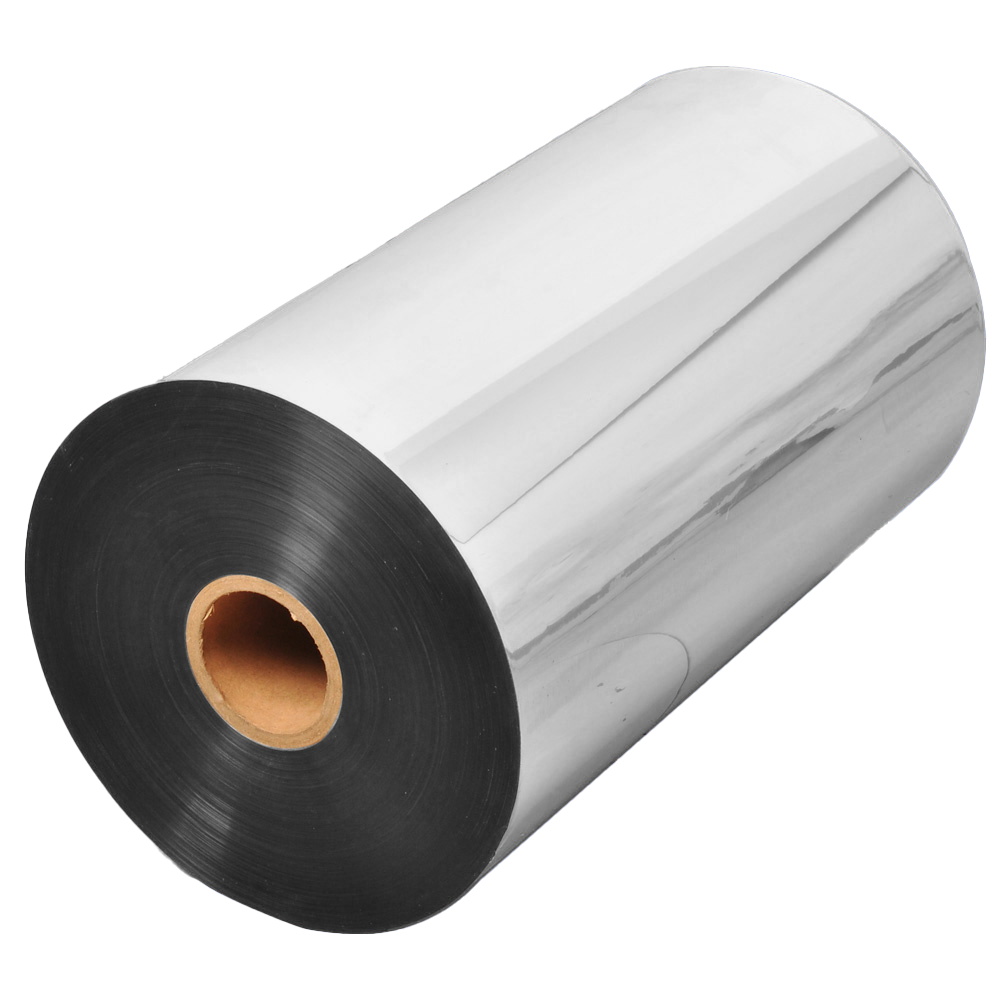
This article provides a complete technical overview of Cailong’s PVC metallized film, including specifications, key properties, typical applications, and purchasing tips — everything a converter or brand owner needs to evaluate this material.
What Is PVC Metallized Film (VMPVC)?
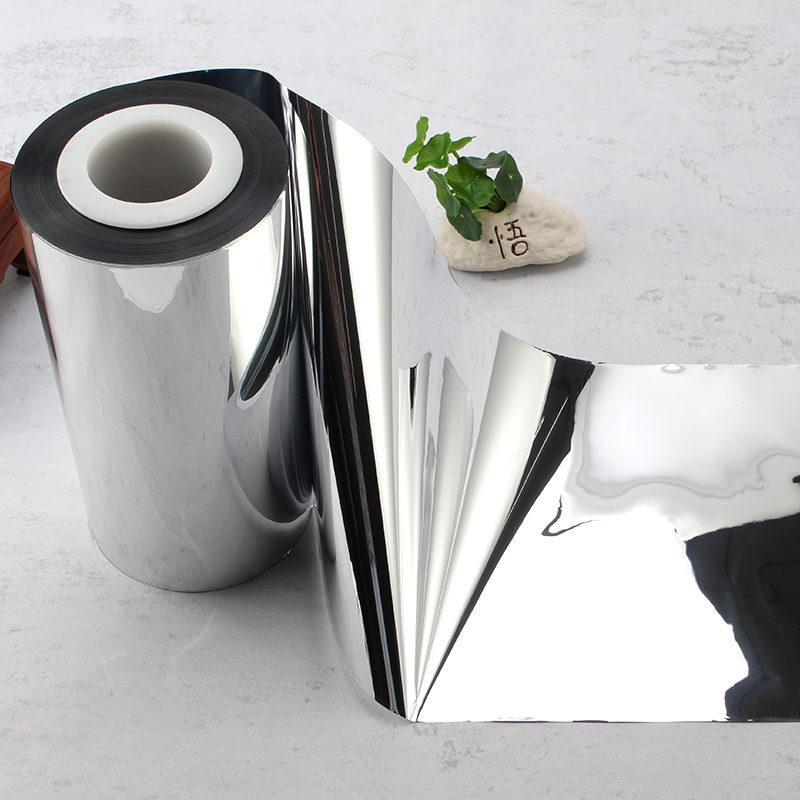
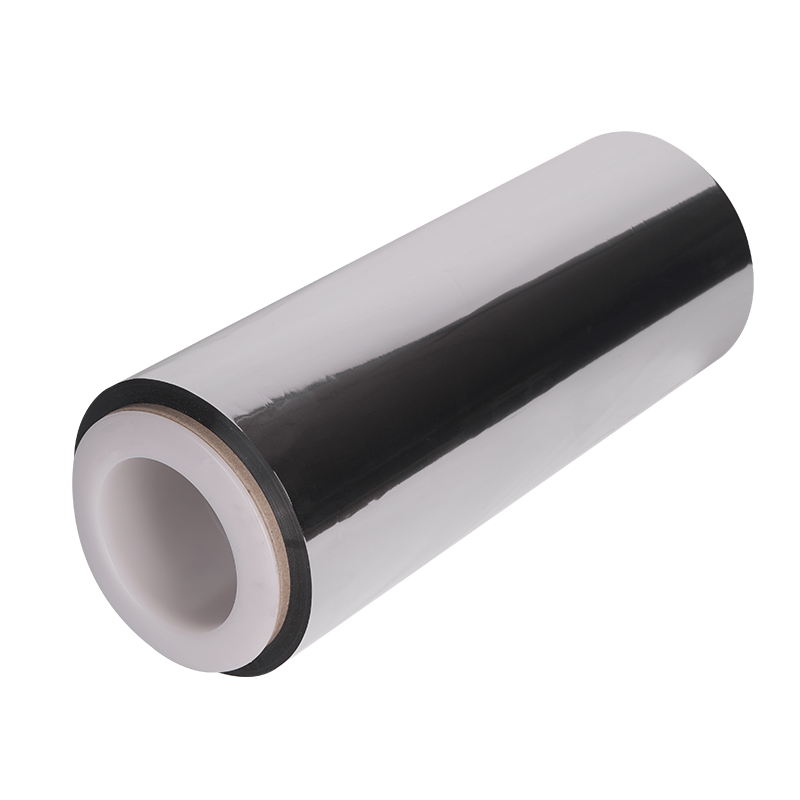
VMPVC stands for Vacuum Metallized Polyvinyl Chloride Film. It starts as a clear or colored PVC base film, which is then passed through a high-vacuum chamber where pure aluminum vapor condenses onto the surface, creating a continuous, mirror-like metal layer only nanometers thick.
The result: a film that looks and feels metallic — but retains the flexibility, die-cutability, and low cost of PVC. Unlike metallized polyester (PET) or metallized nylon (BOPA), VMPVC is particularly prized in applications where rigidity is not required and secondary processing (UV printing, hot stamping, lamination) is frequent.
Industry synonyms: metallized PVC film · vacuum aluminized PVC · silver PVC roll · VMPVC film · PVC metallic label stock.
Why Choose VMPVC Over Other Metallized Films?
|
Factor |
VMPVC (PVC Metallized) |
VMBOPA (Nylon Metallized) |
VM-PET (Polyester Metallized) |
|---|---|---|---|
|
Cost per unit area |
⭐⭐⭐⭐⭐ Lowest |
⭐⭐ Highest |
⭐⭐⭐ Moderate |
|
Flexibility & die-cutting |
Excellent — soft, easy to kiss-cut |
Good but stiffer |
Moderate |
|
Printability (UV, screen, offset) |
Excellent — PVC accepts inks readily |
Requires corona treatment |
Good |
|
Heat resistance |
Limited (~60–80°C max) |
Very high (retort capable) |
High |
|
Barrier (OTR/WVTR) |
Moderate (WVTR ≤15 g/m²·day) |
Very high (with Al layer) |
High |
|
Typical thickness range |
30–250 μm (wide range) |
10–18 μm (thin) |
12–50 μm |
|
Main application |
Labels, gift wrap, decoration, cartons |
Retort pouches, frozen food |
Coffee, snacks, medical |
Bottom line: If your product does not require extreme heat or ultra-long shelf life, but demands brilliant gloss, easy converting, and tight budget, VMPVC is often the most practical solution.
Cailong VMPVC – Key Specifications (Based on Actual Production Data)
All values below are taken from Cailong’s standard QC documentation and comply with BB/T 0030-2004 (Chinese industry standard for metallized films).
|
Parameter |
Unit |
Test Method |
Typical Value |
Remarks |
|---|---|---|---|---|
|
Total thickness |
μm |
GB/T 6672 |
30–250 (customizable) |
Choose based on stiffness & application |
|
Aluminum layer thickness / sheet resistance |
Ω/□ |
GB/T 15717 |
≤2.5 (typical 2.0) |
Lower value = denser Al layer |
|
Aluminum adhesion (tape peel) |
% |
BB/T 0030 |
≤20 (typical ≤1) |
Excellent bonding – no peeling |
|
Aluminum uniformity |
% |
BB/T 0030 |
±15 (typical ±5) |
Consistent mirror appearance |
|
Surface tension (non-Al side) |
mN/m |
GB/14216 |
≥36 (typical 36) |
Ensures ink & adhesive wetting |
|
Tensile strength (MD/TD) |
MPa |
GB/T 13022 |
≥46 (typical 52/50) |
Adequate for label & wrapping |
|
Coefficient of friction (non-Al side) |
— |
GB/10006 |
≤0.65 (typical 0.62) |
Smooth unwinding & feeding |
|
Heating shrinkage (100°C/10 min) |
% |
— |
≤10 (typical 10) |
Moderate – acceptable for non-retort use |
|
Density |
g/cm³ |
GB/T 1033 |
1.35 (±0.2) |
Standard PVC density |
|
Water vapor transmission rate (WVTR) |
g/m²·24h |
GB/T 26253-2010 |
≤15 (typical 10) |
Suitable for dry goods, not long-term wet |
|
Width |
mm |
— |
20–1800 |
Slit to customer requirement |
|
Length per roll |
m |
— |
100–36,000 |
Depends on thickness & width |
Note: Oxygen transmission rate (OTR) is not listed as a standard test for VMPVC because PVC itself has moderate gas barrier; the metallized layer improves it significantly, but for high-O₂-barrier needs, PET or nylon-based films are recommended.
Key Performance Advantages of Cailong VMPVC
Brilliant Metallic Gloss
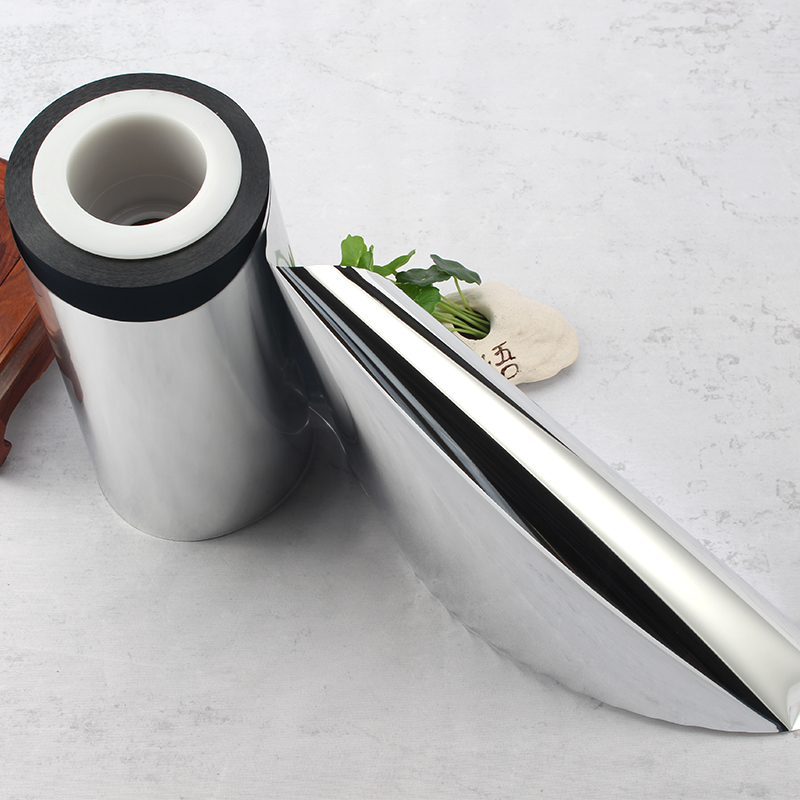
The vacuum-deposited aluminum layer produces a highly reflective, mirror-like finish that elevates any printed design. Color saturation is dramatically improved — especially important for luxury packaging and promotional materials.
Strong Aluminum Adhesion
Tested per BB/T 0030, the aluminum layer exhibits adhesion loss <1% (far below the ≤20% limit). This means no flaking, no dusting during slitting, and reliable performance in subsequent lamination or hot stamping.
Excellent Printability
The non-aluminum side (or selectively treated areas) supports UV printing, screen printing, offset, gravure, and even hot foil stamping. No special primer is required for most common ink systems.
Superior Composite Performance
VMPVC can be laminated to paper, cardboard, foam, or other plastic films without bubbling, wrinkling, or delamination. This makes it ideal for gift boxes, rigid cartons, and point-of-purchase displays.
Wide Thickness & Width Range
From 30 μm (ultra-thin, flexible) to 250 μm (stiff, board-like) , and widths up to 1800 mm — Cailong can supply exactly the format your production line needs.
Typical Applications of PVC Metallized Film
Labels & Stickers
Self-adhesive label stock often uses VMPVC as the face material. It die-cuts cleanly, runs well on automatic labeling machines, and gives a premium “foil” look without the cost of true metal foil.
Gift Wrap & Decorative Packaging
Gold, silver, or holographic-effect VMPVC is widely used for Christmas gift boxes, candy wrappers, ribbon bows, and wrapping paper. The metallic sheen catches light beautifully.
Cigarette & Luxury Cartons
Inner liners, outer sleeves, and display cartons for cigarettes, wine, tea, and cosmetics frequently incorporate VMPVC for its rich visual appeal and tactile smoothness.
Building Decorative Materials
Wallpaper accents, furniture edge banding, and decorative panels sometimes use thicker VMPVC (≥100 μm) for a durable, wipe-clean metallic surface.
Food & Confectionery (Short Shelf Life)
For dry snacks, chocolates, and candies that do not require extended shelf life, VMPVC provides adequate moisture barrier (WVTR ≤15 g/m²·day) at a fraction of the cost of foil or metallized PET.
How to Select the Right VMPVC Grade
|
Application |
Recommended Thickness |
Key Consideration |
|---|---|---|
|
Self-adhesive labels |
30–50 μm |
Flexibility & die-cut precision |
|
Gift boxes / carton lamination |
50–100 μm |
Stiffness & lamination compatibility |
|
Building decoration / floor covering |
100–250 μm |
Durability & scratch resistance |
|
Cigarette / tea inner liner |
30–60 μm |
Gloss uniformity & low odor |
|
Short-shelf-life food wrap |
40–80 μm |
WVTR & food contact certification |
Always confirm food contact compliance with your supplier if the film will touch dry food directly. Cailong can provide relevant declarations upon request.
Quality Control & Supply Assurance at Cailong
Foshan Cailong Metallic Packing Material Co., Ltd. has been manufacturing vacuum metallized films for over a decade. Every roll of VMPVC undergoes:
-
Incoming raw material inspection (PVC base film thickness, clarity, surface energy)
-
In-process monitoring (aluminum deposition uniformity, chamber pressure, roll tension)
-
Final QC tests (sheet resistance, adhesion, shrinkage, tensile, COF, WVTR)
-
Climate-controlled storage to prevent moisture absorption and static buildup
We support custom slitting, rewinding, and packaging according to your requirements — export-ready with proper labeling.
Frequently Asked Questions (FAQ) – VMPVC
Q: Is VMPVC recyclable?
PVC is technically recyclable, but recycling infrastructure varies by region. Many converters choose VMPVC for applications where recyclability is secondary to cost & aesthetics. Please consult local regulations.
Q: Can VMPVC be used for food contact?
Yes, provided the specific grade complies with food contact regulations (e.g., GB 4806.6-2016 in China, FDA 21 CFR 175.300 for US). Request a compliance statement from Cailong for your intended use.
Q: Does VMPVC yellow over time?
Like all PVC, prolonged exposure to UV light may cause slight yellowing. For outdoor or long-term display, consider adding a UV-stabilized topcoat or laminating with a clear PET overlay.
Q: What is the maximum temperature VMPVC can withstand?
Continuous service temperature is typically below 70°C. Brief exposure up to 100°C (as in shrink testing) is possible, but deformation may occur. Not suitable for retort or boiling water immersion.
Q: Can I get samples before ordering?
Absolutely. Cailong offers free A4-size samples for qualification. Contact us with your target thickness and application, and we will send matching samples along with a COA.
Conclusion: VMPVC – The Workhorse Metallized Film for Decorative & Label Markets
While advanced engineering films like VMBOPA and VM-PET dominate the high-barrier food packaging sector, PVC metallized film remains the go-to choice for decorative, labeling, and short-shelf-life applications where cost, gloss, and convertibility are paramount.
Comment