MDOPE Film for Mono-Material PE Packaging
Aug 19,2026 | FOSHAN CAILONG METALLIC PACKAGING MATERIAL CO.,LTD
MDOPE Film for Mono-Material PE Packaging
Moving a flexible package toward a PE-focused structure often looks simple on a material list: replace a PET or OPP outer web with an oriented polyethylene film and keep the sealant layer in the same polymer family. In production, the change is more complicated. Print quality, web stiffness, lamination bond, heat exposure, pouch-making stability, barrier requirements, and the final recycling claim all have to work together.
That is why MDOPE film for mono-material PE packaging should be qualified as part of a complete converting system, not approved only because the base resin is polyethylene. A water-based coated MDOPE grade can provide a useful outer print web for PE-oriented structures, but its real value depends on how the coating, ink, adhesive, sealant film, and equipment interact.
Why PE-Focused Structures Can Become Difficult During Conversion
Traditional flexible laminates often assign different jobs to different polymers. PET may provide stiffness and print stability, while PE provides sealing and toughness. When a converter moves toward a PE-rich structure, some of those functions must be rebuilt inside the polyethylene family.
The most common mistake is to treat polymer compatibility as the only design target. A package can be PE-focused and still fail commercially because the web stretches during printing, the laminate curls, ink adhesion changes after aging, the adhesive does not cure as expected, or the pouch loses dimensional stability during sealing.
The correct question is therefore not simply, “Can this film be recycled with PE?” It is, “Can this film perform the required outer-web functions while keeping the structure compatible with the intended PE packaging strategy?”
What Water-Based Coated MDOPE Changes
MDOPE is oriented in the machine direction to improve stiffness and dimensional control compared with conventional blown or cast PE films. A functional water-based coating can then be used to modify the surface for printing, lamination, or other downstream requirements.
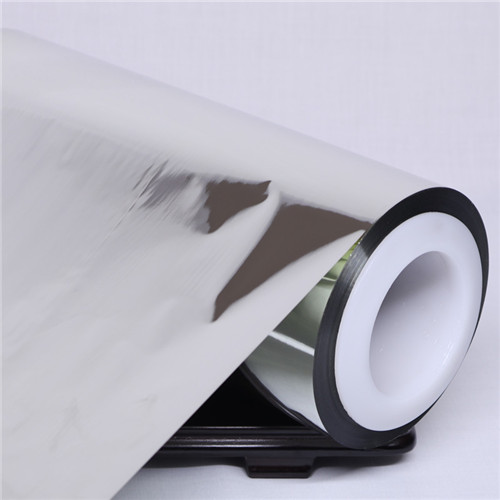
Cailong’s MDOPE Water-Based Coated Film is offered as a coated MDOPE platform for PE-focused flexible packaging. The official product information lists typical base-film thicknesses of 18–50 μm, machine-direction tensile strength above 140 MPa, surface tension of at least 38 mN/m, and haze below 5%. Heat resistance is grade-dependent, with the product page indicating typical capability up to roughly 90–120°C depending on the selected grade and application.
These figures are useful screening data, not finished-package guarantees. Printing, adhesive selection, coating formulation, line speed, heat history, and the companion PE layer can change the final result.
MDOPE Film for Mono-Material PE Packaging: Start with the Job of Each Layer
Before requesting samples, build a function map for the package. List what the current laminate is doing and identify which functions must remain after the structure changes.
For an outer web, the list may include:
print registration and graphic appearance;
stiffness for pouch handling;
resistance to tension during printing and lamination;
surface compatibility with ink and adhesive;
dimensional stability during drying and sealing;
optical clarity or controlled haze;
barrier contribution, where a functional coating is used;
puncture and abuse resistance of the total laminate.
The inner PE layer may provide sealability, product-contact performance, toughness, and drop resistance. Adhesive, coating, zipper, valve, spout, label, or ink can also affect the final recycling assessment. “Mono-material” does not mean that the package contains only one physical layer.
Compare the Structure, Not Only the Film
A buyer evaluating MDOPE against PET or BOPP should compare the complete packaging structure under the same process conditions.
A conventional structure such as PET / PE may offer a wide printing and thermal window because PET provides strong dimensional stability. A PE-focused design may instead use coated MDOPE / PE, with the MDOPE web supplying stiffness and printability while the PE sealant layer supplies sealing and toughness.
The potential advantage is structural simplification around one dominant polymer family. The tradeoff is that converters must rebuild the operating window. Tension, drying temperature, adhesive choice, winding conditions, and sealing settings that were stable with PET should not be copied automatically.
For products that also need high oxygen or moisture protection, the buyer must define whether the selected coating grade provides enough barrier or whether another PE-compatible barrier approach is required. Barrier should always be checked after printing, lamination, pouch forming, and realistic flexing because the finished package can behave differently from the incoming film.
Printing: Control Surface and Heat Together
A water-based coated MDOPE film is often considered as an outer print web, so printing qualification should be one of the first production trials.
Confirm which side is coated and keep that side traceable through slitting and rewinding. Wrong-side printing can produce poor wetting or weak ink anchorage and may be misdiagnosed as a bad material batch.
The official Cailong product data lists a typical surface tension of at least 38 mN/m. That gives a useful starting point, but dyne level alone cannot prove ink adhesion. The production trial should use the actual ink system, color coverage, press speed, drying profile, and overprint treatment planned for the commercial package.
Inspect:
wetting and pinholing;
color density and registration;
tape or rub adhesion after full drying;
ink transfer after winding;
appearance after lamination;
adhesion after storage and product contact.
MDOPE is more heat-sensitive than PET, so the drying profile deserves special attention. Excessive web temperature can create shrinkage, distortion, register drift, or roll-shape problems. The safest process window is the lowest effective drying condition that fully handles the selected ink system.
Lamination: Identify the Real Failure Interface
Lamination failures are often blamed on the film even when the weak interface is somewhere else.
In a printed laminate, separation can occur between the MDOPE substrate and coating, coating and ink, ink and adhesive, adhesive and sealant film, or inside a poorly cured adhesive layer. A single peel-strength number does not identify the cause.
During qualification, mark both separated surfaces and record where the failure occurred. Use the actual commercial adhesive, mix ratio, coating weight, drying conditions, cure time, and PE sealant film. Compare initial bond with fully cured bond rather than approving the structure from an early test.
If the packaged product contains oils, fragrances, detergents, or other active components, expose the finished laminate to the real product before final approval. Dry laboratory samples can miss chemical interactions that appear after filling.
Sealing and Pouch Making Need a New Window
A PE-focused laminate can behave differently during pouch making because both webs may soften or respond to heat within a narrower range than a PET/PE structure.
Evaluate seal initiation, seal strength, hot tack, jaw temperature, dwell time, pressure, and cooling. Also inspect distortion near the seal, zipper or spout areas, gussets, and registration marks.
For larger pouches or products that experience transport impact, include drop testing and filled-pack abuse testing. A material choice that improves recycling compatibility but reduces package survival creates a different sustainability problem through product loss and rejects.
The trial should therefore combine machine performance with finished-package performance.
Barrier Requirements Must Be Defined Before the Trial
Some water-based functional coatings can add barrier performance, but buyers should not assume one universal OTR or WVTR for every MDOPE coated grade.
Start with the product:
What causes shelf-life loss: oxygen, moisture, aroma loss, light, or a combination?
What shelf life is required?
What temperature and humidity will the pack see?
Will the pack be flexed, folded, or compressed during distribution?
Does the product require transparency?
Is hot filling, pasteurization, or another thermal process involved?
Only after these questions are defined should the buyer request grade-specific barrier data. Test methods and conditions should be recorded so values from different suppliers or structures can be compared correctly.
For sensitive foods, pet food, powders, or liquids, the finished laminate should be tested after the same converting steps used in production. A barrier value measured on a flat incoming film is a screening value, not a shelf-life guarantee.
A Practical PE-Focused Structure to Start Testing
A common development direction is:
Printed water-based coated MDOPE / adhesive / PE sealant
This structure keeps the major film layers within the PE family and can be a useful starting point for stand-up pouches, flat-bottom bags, sachets, and other flexible packs.
The exact PE sealant grade should be selected around sealing temperature, stiffness, puncture resistance, product contact, and drop-test requirements. If additional barrier is required, the team should evaluate whether the chosen coated MDOPE grade provides enough performance or whether a different PE-compatible functional layer is needed.
Do not freeze the final gauge before trials. Thickness should be optimized around stiffness, yield, converting stability, abuse resistance, and cost per accepted package.
Procurement Checks Before Moving from Sample to Order
International buyers should use a production-oriented supplier checklist rather than asking only for price and thickness.
Ask for:
exact coating function and coated-side identification;
available thickness and width;
typical mechanical and optical data for the offered grade;
recommended ink and adhesive trial conditions;
storage and handling guidance;
roll winding and edge-quality standards;
batch and roll traceability;
sample quantity suitable for a real production trial;
grade-specific regulatory or food-contact documentation where relevant.
Consistency is as important as peak performance. A short hand sample can look good while cross-web coating variation, poor winding, or inconsistent roll edges create waste on a commercial line.
Cost Reduction Should Be Measured per Accepted Package
A PE-focused structure may reduce material complexity, but the lowest film price is not automatically the lowest packaging cost.
Compare the complete process: film yield, adhesive use, ink and primer requirements, drying energy, press speed, lamination speed, curing time, scrap, pouch-making efficiency, rejects, and finished-pack failure risk.
If a coated MDOPE structure removes a separate surface-treatment step or supports downgauging, that can create value. If it requires slower production or creates higher scrap, the apparent material saving may disappear.
The useful purchasing metric is cost per accepted package that meets shelf-life, transport, appearance, and compliance requirements.
FAQ
Can MDOPE replace PET directly in a PET/PE laminate?
Not as a drop-in change. MDOPE can perform outer-web functions in a PE-focused structure, but printing tension, drying temperature, lamination, sealing, and finished-package performance should be requalified.
Does water-based coated MDOPE automatically make a package recyclable?
No. The base film supports a PE-oriented material strategy, but the complete package includes coatings, inks, adhesives, closures, labels, and other components. Recyclability must be assessed for the final structure and target market.
What data should buyers request first?
Start with thickness, surface treatment or coating function, mechanical data, optical data, thermal limits, grade-specific barrier data where relevant, and documentation for the intended application.
Should OTR and WVTR be tested before or after lamination?
Both can be useful, but finished-laminate testing is more relevant to the commercial package. Printing, adhesive cure, flexing, and pouch forming can change barrier performance.
Is MDOPE suitable for high-speed printing?
It can be, but the production window should be established on the actual press. Web tension and drying temperature need particular attention because PE responds differently to heat than PET.
Build the Qualification Around the Finished Package
MDOPE film for mono-material PE packaging is most useful when the project is treated as a structural redesign rather than a simple film substitution. The coated MDOPE web, ink, adhesive, PE sealant, converting conditions, and end-use requirements should be tested together.
For projects developing PE-focused pouches or laminates, Cailong’s MDOPE Water-Based Coated Film provides a practical material platform to evaluate. The next step is to define the required coating function, package structure, line conditions, and acceptance tests before requesting a production trial.
Comment