Mono-Material High Barrier Packaging with BOPP AlOx
Aug 18,2026 | FOSHAN CAILONG METALLIC PACKAGING MATERIAL CO.,LTD
Why mono-material structures often lose barrier
A conventional laminate assigns different functions to different polymers. PET may provide print stability and dimensional control, a metallized or coated layer may control oxygen and moisture, and PE or CPP may provide sealing. When the design is simplified around PP, the converter must rebuild those functions with PP-compatible webs. Standard BOPP offers useful stiffness and printability, while CPP provides sealing, but neither automatically delivers the barrier needed for coffee, dry foods, pharmaceuticals, or aroma-sensitive products.
Barrier can also be lost during conversion. A thin oxide coating may be damaged by excessive tension, hard folds, abrasive rollers, or poor winding. Adhesive selection, cure, ink coverage, and laminate flexing can change the OTR and WVTR measured on the finished structure. The incoming film value is only the starting point.
How BOPP AlOx Film supports mono-material high barrier packaging
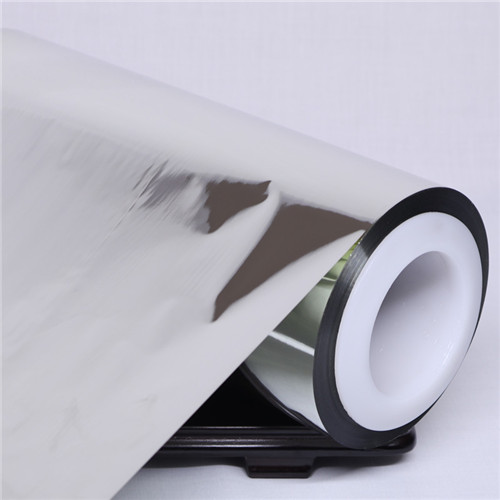
Cailong BOPP AlOx Film uses a BOPP base with an AlOx barrier layer and a corona-treated surface. The supplied product information describes oxygen and moisture resistance, coating adhesion, microwave capability, metal-detector compatibility, and use as a middle layer in a three-layer structure. Because the substrate is PP, it can support development of PP-based laminates without introducing PET as the primary structural web.
Selected 18 micrometer grades list typical OTR values of 1.0 and 0.8 cc/m2.24h under ASTM D3985, and typical WVTR values of 2.0 and 1.3 g/m2.24h under ASTM F1249. Listed typical AlOx-layer adhesion is 2.5 or 2.0 under the supplier's EAA method, depending on grade. These values are internal reference data for the film and must not be treated as guaranteed finished-pouch performance.
Structure options for PP-based laminates
Development can begin with BOPP/BOPP AlOx/CPP when an outer printing web, a protected barrier layer, and a PP sealant are required. A simplified BOPP AlOx/CPP structure may be considered when the coated grade, print position, stiffness, and converting process permit. Product requirements determine whether two or three layers are appropriate. A thinner structure is not automatically better if it loses seal reliability, puncture resistance, or barrier after flexing.
Keep the AlOx layer protected inside the laminate. Select inks and adhesives that are compatible with the treated surfaces, and confirm that bond strength develops after the specified cure. For boiled or pasteurized packs, use only a grade and adhesive system validated for the actual time, temperature, food, and fill process. The supplier data identifies selected BOPP AlOx grades as pasteurizable, but the final construction still needs testing.
What to compare with PET AlOx, EVOH, and metallized film
PET AlOx may provide a different balance of stiffness, temperature behavior, and converting stability, while BOPP AlOx keeps the barrier substrate within the PP family. EVOH barrier depends on layer design and can be influenced by humidity. Metallized films provide light barrier and a metallic appearance but remove product visibility. BOPP AlOx is most relevant when the pack needs transparency, PP-based material compatibility, and meaningful oxygen and moisture control. It should not be presented as superior in every application.
Validation checklist before a packaging trial
- Set shelf-life targets and translate them into finished-package oxygen and moisture limits.
- Measure OTR and WVTR after printing, lamination, curing, flexing, and pouch making.
- Check coating integrity at folds, zipper areas, gussets, and seal transitions.
- Validate seal initiation, operating window, hot tack, contamination tolerance, and burst strength.
- Run transport, compression, drop, and leak tests with the actual product and fill weight.
- Review the complete pack, including inks, adhesives, closures, and labels, against the applicable recycling-design guidance.
Processing and storage controls
The supplied information recommends storage below 30 C at about 50 percent relative humidity to maintain film performance. Keep rolls protected from moisture, dust, sharp contact, and uncontrolled temperature changes. Use stable web tension and avoid treating the oxide-coated web like an uncoated BOPP. Confirm the printable or laminating side before the run and keep traceable samples from each production trial.
Connect barrier targets to the packaged product
Do not specify a barrier film before understanding the product. Oxygen-sensitive fats, roasted coffee aromas, hygroscopic powders, and dry snacks can fail for different reasons. Package surface area, headspace, residual oxygen, seal leakage, distribution temperature, and storage humidity all influence shelf life. Convert the product requirement into a package-level target and then test whether the proposed laminate has adequate margin.
Pilot pouches should be filled on representative equipment and stored in the markets where the package will be sold. Monitor product quality together with package OTR, WVTR, seal integrity, and visual condition. If shelf life is missed, determine whether permeation, seal leakage, coating damage, or product preparation is responsible before changing grades.
Cost and lightweighting decisions
A two-layer structure may use less material than a three-layer structure, but the comparison must include scrap, line speed, print yield, adhesive use, barrier retention, and rejected packs. Lightweighting is successful only when the thinner structure continues to pass converting, transport, and shelf-life tests. Compare cost per accepted package rather than film price per kilogram.
Supplier qualification and batch consistency
Request grade-specific data, roll identification, certificates of analysis, and a clear change-notification process. Run more than one production lot when barrier variation would affect shelf life. Incoming checks can include roll condition, thickness, surface treatment, coating adhesion, and selected barrier tests. Keep retained samples from approved lots and compare them with converting yield and finished-package results.
Supply stability also influences structure approval. Confirm standard widths, minimum order quantity, lead time, and backup capacity before replacing an established laminate. A barrier grade that performs in a laboratory but cannot be supplied consistently may create more commercial risk than a slightly more conservative structure.
FAQ
Does a PP-based laminate automatically qualify as recyclable?
No. Recyclability depends on the full construction, material proportions, coatings, inks, adhesives, closures, local collection, and the rules used for assessment. Mono-material describes a design direction, not an automatic certification.
Can BOPP AlOx replace PET AlOx directly?
Sometimes, but not as an unchecked one-for-one substitution. Compare stiffness, shrinkage, printing, lamination, barrier after conversion, sealing, and machine performance in the intended structure.
Should the lowest OTR grade always be selected?
No. Select the barrier needed for shelf life, then balance it against converting durability, cost, availability, and the rest of the laminate. Excess barrier does not correct weak seals or package damage.
Conclusion
Mono-material high barrier packaging succeeds when barrier, PP compatibility, printability, sealing, and distribution performance are designed together. BOPP AlOx Film provides a transparent PP-based barrier option with documented grade-specific OTR and WVTR values. Review the product page, select a candidate grade, and verify the complete structure under actual converting and shelf-life conditions.
Comment