BOPLA Film for Compostable Flexible Packaging: A Buyer-Focused Guide to Performance, Processing, and End-of-Life Claims
Aug 06,2026 | FOSHAN CAILONG METALLIC PACKAGING MATERIAL CO.,LTD
Why BOPLA Film Is Entering More Packaging Discussions
International packaging buyers are under increasing pressure to reduce dependence on conventional plastics while preserving the protection, appearance, and production efficiency expected from modern flexible packaging. A material cannot succeed commercially only because it is described as sustainable. It must also run on converting equipment, tolerate distribution, present the product attractively, and support the required shelf life.
BOPLA Film offers a practical material direction for this challenge. BOPLA means biaxially oriented polylactic acid film. PLA is a bio-based polymer that can be produced from renewable plant-derived raw materials. Through biaxial orientation, the material is stretched in both the machine and transverse directions to improve film properties and create a more useful packaging substrate.
Cailong BOPLA Film is positioned as a new bio-based and biodegradable film material for packaging applications. Compared with a simple environmental message, its real value is the combination of a renewable material base, mechanical performance, appearance, and converting potential. Buyers should nevertheless evaluate it as an engineered packaging film, not as a direct one-to-one substitute for every PET, BOPP, or PE film.
Understanding Bio-Based, Biodegradable, and Compostable
These terms are related but not interchangeable. Bio-based describes the source of the material. It indicates that part or all of the polymer originates from renewable biological resources rather than fossil feedstocks. It does not, by itself, define how the finished package behaves after disposal.
Biodegradable describes the ability of a material to be broken down by biological activity under suitable conditions. The rate and completeness of degradation depend on temperature, humidity, microorganisms, material thickness, and the surrounding environment.
Compostable is a more specific end-of-life concept associated with defined composting conditions and performance criteria. Industrial composting and home composting are not the same. A material suitable for one route should not automatically be presented as suitable for the other.
For Cailong BOPLA Film, buyers should identify the exact claim required in the destination market and confirm what documentation applies to the selected grade. The final package may contain ink, adhesive, coating, label, zipper, or sealant components. Every component must be considered before making a package-level claim.
What Biaxial Orientation Adds to PLA Film
Orientation is important because it changes how a polymer film behaves. Stretching in two directions can improve strength, dimensional control, optical appearance, and handling compared with an unoriented film. These characteristics can make BOPLA Film more suitable for printing, lamination, labels, and flexible packaging conversion.
The benefits must be assessed according to the intended use. A printed label may prioritize clarity, stiffness, and registration. A packaging laminate may require controlled tension, bond compatibility, and resistance to flexing. A heat-sealable structure may need a wider operating window and reliable seal integrity.
Converters should not assume that BOPLA Film will respond exactly like BOPP or BOPET. The polymer base and thermal behavior are different. A trial should establish appropriate web tension, drying temperature, nip pressure, winding hardness, and storage conditions.
Matching BOPLA Film to the Product
The packaged product should determine the film structure. Buyers should begin with product sensitivity rather than selecting a film solely because it supports a sustainability goal.
Important questions include:
Is the product sensitive to oxygen, moisture, aroma loss, or light?
What shelf life is required?
Will the package be stored at room temperature, chilled, or exposed to heat?
Does the product contain oils, fragrances, alcohol, or aggressive ingredients?
Is the package a monoweb, laminate, label, lidding film, or decorative wrap?
Does the application require heat sealing, adhesive bonding, or both?
Will the finished pack be folded, squeezed, or repeatedly flexed?
BOPLA Film may be suitable for food, labels, graphics, and selected non-food packaging applications, but the final design must meet the actual protection requirement. If additional barrier is required, the buyer may need a coating, metallization, or compatible laminate structure. Such additions can affect the end-of-life claim and must be evaluated at package level.
Printing and Graphic Performance
Print adaptability is a major purchasing concern because packaging is both a protective system and a communication surface. BOPLA Film can support high-quality graphics, but printing conditions should be validated with the selected ink and press.
Converters should evaluate surface treatment, ink wetting, adhesion, color density, drying efficiency, registration, and resistance to scratching. The film should also be tested after aging because initial ink adhesion does not always represent performance after storage or flexing.
Excessive drying temperature can create dimensional change or affect web stability. Press settings used for BOPP or PET may therefore require adjustment. A controlled pilot run should begin at conservative conditions, followed by gradual optimization of speed and temperature.
If reverse printing and lamination are used, the interaction among film, ink, adhesive, and companion layer becomes critical. Fully cured bond strength and appearance should be checked before commercial approval.
Heat Sealing and Package Integrity
Some BOPLA packaging designs require heat sealing, while others use BOPLA as a printing or structural layer combined with a separate sealant. The correct approach depends on the selected film grade and package design.
Seal development should consider temperature, dwell time, pressure, line speed, and contamination in the seal area. The goal is a stable operating window rather than one successful laboratory seal.
Finished packages should be tested for seal strength, leakage, drop resistance, compression, and aging. If the product produces powder, crumbs, or oil in the sealing area, trials should include that contamination. A material may provide acceptable seal strength in a clean laboratory but perform differently on a commercial filling line.
Buyers should also verify whether the complete sealing structure supports the intended biodegradable or compostable claim. A conventional sealant layer may change the disposal pathway of the package.
Converting BOPLA Film on Existing Equipment
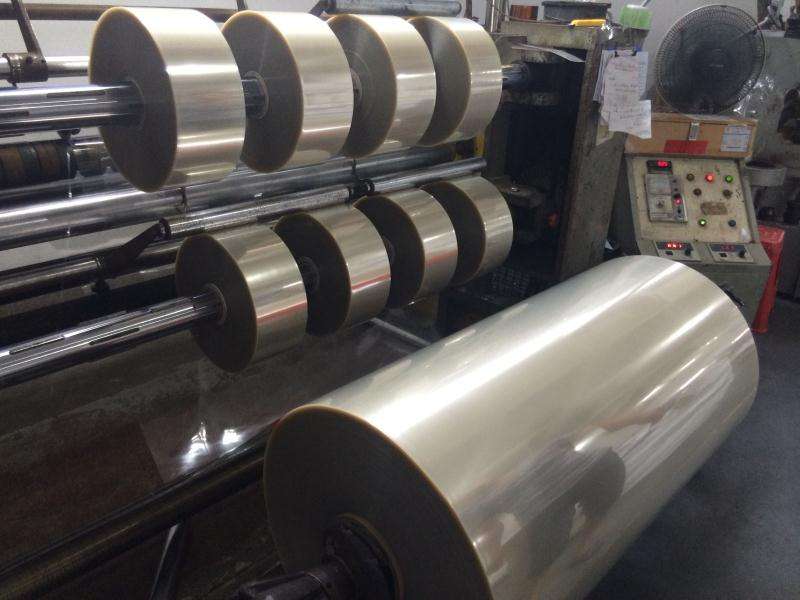
One of the first questions from converters is whether BOPLA Film can run on existing printing, laminating, slitting, and packaging equipment. In many cases, existing machinery can be used, but process conditions may need to be optimized.
Key control points include:
Web tension during unwinding and printing
Drying temperature and exposure time
Roller cleanliness and surface condition
Static control
Adhesive selection and curing
Slitting tension and edge quality
Winding hardness
Storage temperature and humidity
A staged trial is preferable to a full production launch. The converter can first test a short roll, then a pilot laminate, then finished packages with the actual product. This approach helps identify whether a problem comes from the film, ink, adhesive, equipment setting, or package geometry.
Mechanical Performance and Handling
Cailong BOPLA Film is intended to deliver practical mechanical performance for packaging. Biaxial orientation supports strength and handling, but the film should still be protected from excessive heat, sharp folds, rough rollers, and uncontrolled tension.
Buyers should evaluate tensile behavior, tear response, puncture resistance, stiffness, and dimensional change according to the application. A label and a pouch do not place the same mechanical demands on the film.
Roll quality also affects production. Wrinkles, telescoping, damaged edges, or uneven winding can create waste even when the base material is suitable. Incoming inspection should include roll appearance, width, thickness, core condition, winding, and protective packaging.
Responsible Environmental Communication
Environmental claims must be accurate, specific, and relevant to the market where the package is sold. Terms such as green, eco-friendly, and plastic-free can be misleading if they are not supported by the actual structure.
A responsible statement should identify the material basis and the intended disposal condition. For example, a buyer may communicate that a package uses a bio-based PLA film and is designed for a defined composting route, provided that the complete package has been properly assessed.
The buyer should also consider whether the destination market has collection and treatment infrastructure for that route. A technically compostable package may still enter general waste if consumers do not have access to suitable facilities.
Clear disposal instructions can improve the usefulness of the environmental claim and reduce confusion. Certification requirements and labeling rules should be checked for each target country.
Questions to Ask a BOPLA Film Supplier
Supplier evaluation should cover technical performance and application support. Useful questions include:
What BOPLA Film grades are available for printing, lamination, or sealing?
What thicknesses and widths can be supplied?
What storage conditions are recommended?
Which surface is intended for printing or bonding?
What mechanical and optical test data are available?
What end-of-life documentation applies to the selected grade?
Can sample rolls be supplied for machine trials?
How is thickness and roll quality controlled?
What is the recommended processing-temperature range?
Can batch-specific quality records be provided?
The supplier should also receive clear information about the product, package structure, equipment, target market, and environmental claim. Material selection becomes more reliable when both parties define the application rather than discussing BOPLA Film only in general terms.
A Practical Qualification Process
The qualification process should begin with technical-data review and small-scale film inspection. Printing, lamination, or sealing trials should then be conducted with the actual materials intended for production.
Finished packages should be tested for appearance, bond strength, sealing, mechanical durability, and product compatibility. Shelf-life testing should use the real product whenever possible. Environmental claims should be reviewed only after the complete structure has been finalized.
Commercial approval should be based on repeatable results from representative material, not a single successful sample. This is especially important when converting a new bio-based film for the first time.
Conclusion
Cailong BOPLA Film provides a bio-based and biodegradable material option for buyers seeking more sustainable flexible packaging. Its biaxially oriented structure supports practical strength, appearance, printing, and conversion, while its PLA base offers an alternative to conventional fossil-derived films.
The best results come from matching the film to the product, equipment, package structure, and end-of-life route. Buyers should validate printing, sealing, lamination, mechanical performance, shelf life, and environmental claims as one complete system. With disciplined qualification and accurate communication, BOPLA Film can become a credible component of sustainable packaging development rather than only a marketing statement.
Comment