Water-Based Coated MDOPE Film for Mono-PE Packaging: A Structure-Change Decision Framework
Aug 12,2026 | FOSHAN CAILONG METALLIC PACKAGING MATERIAL CO.,LTD
Decision 1 — Is the Existing Laminate Solving More Problems Than Necessary?
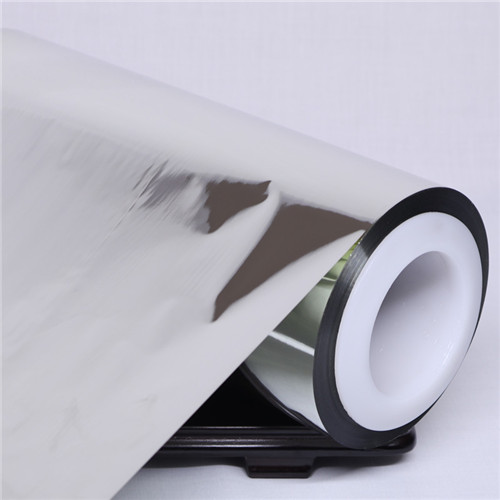
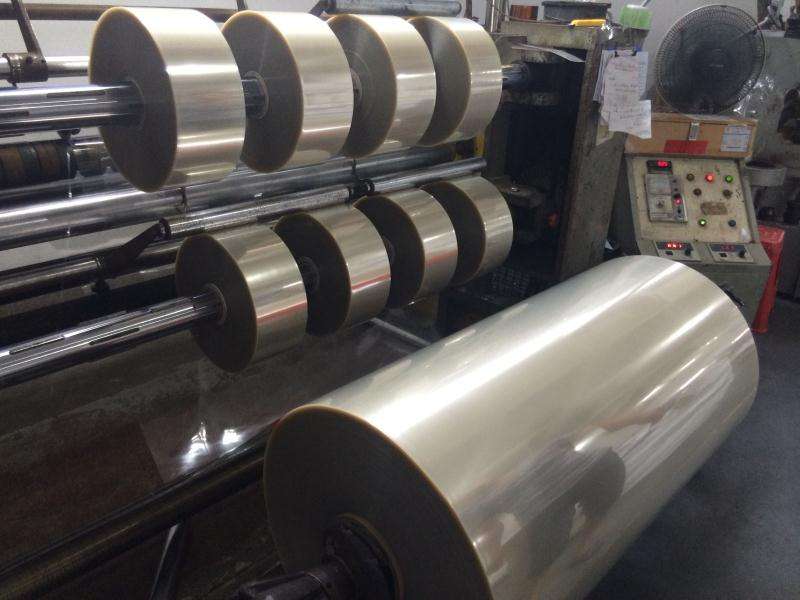
Water-based coated MDOPE film enters the conversation when a packaging team wants to simplify a laminate built from different polymer families. Conventional structures may use separate webs for printability, stiffness, barrier, mechanical protection and sealing. Those layers can perform well, but their material diversity may complicate sorting and recycling. Cailong Water-Based Coated MDOPE Film gives buyers a PE-oriented substrate with a functional water-based coating, allowing the team to investigate whether some required functions can be delivered within a more compatible material family.
The redesign should begin with a layer-by-layer audit. Record what every layer does, what failure it prevents, and whether that function is still required. A decorative outer web, barrier layer, reinforcement layer and sealant should not be removed merely to reduce the layer count. Instead, the buyer should define measurable targets for protection, print appearance, seal integrity, stiffness, drop performance, line speed and shelf life. A simpler structure is successful only when it continues to protect the product and run reliably.
Decision 2 — What Does “Mono-PE” Mean for This Market?
A PE-oriented structure may improve compatibility with polyethylene recycling streams, but “mono-material” and “recyclable” should not be used as automatic synonyms. The complete package includes inks, adhesives, coatings, closures, labels and possible fitments. Local collection, sorting and reprocessing infrastructure also matters. Buyers should evaluate the finished construction against the applicable design-for-recycling guidance in each target market and have any environmental claim reviewed before publication.
The water-based nature of the coating can support a project seeking to move away from solvent-heavy assumptions, but it does not by itself prove a recycling outcome or a regulatory claim. Coating weight, chemistry, package composition and end-of-life infrastructure remain relevant. The strongest commercial communication states what was actually designed and assessed. It avoids turning one material feature into a broad promise about every package and every disposal route.
Decision 3 — Which Package Function Is Most Difficult to Preserve?
Barrier and Shelf Life
When a mixed-material laminate is simplified, barrier is often the first concern. The packed product may be sensitive to oxygen, moisture, aroma loss or another environmental factor. The buyer should translate the target shelf life into package tests rather than expect the film name to answer the question. Cailong Water-Based Coated MDOPE Film should be evaluated in the intended structure, with the real sealant, adhesive, ink, package geometry and packed product. Barrier measured on a flat film can change after flexing, folding, sealing and distribution.
Mechanical Survival
MDOPE contributes directional stiffness and handling characteristics, while the complete PE structure must still tolerate converting and distribution. Drop tests, compression, puncture, tear initiation, zipper insertion and pouch corners may expose weaknesses not visible in a flat sample. Buyers should reproduce the package size, fill weight and headspace. A material substitution that passes a short machine trial but fails after filling has not met the project objective.
Print and Shelf Appearance
Brand owners expect a recyclable-design project to maintain clear graphics and consistent appearance. Printing trials should use the planned ink, treatment condition, drying profile and line speed. Registration, ink anchorage, rub resistance and appearance after lamination or pouch making should be inspected. The coating and MDOPE substrate form only part of this result; operator settings, contamination and ink compatibility can change performance.
Decision 4 — Can the New Structure Run on Existing Equipment?
Commercial viability depends on the full converting chain. The trial should document unwind behavior, web tension, static control, guiding, print drying, lamination, curing if applicable, slitting, sealing and pouch making. MDOPE may respond differently from a familiar PET outer web, so settings should be established deliberately. Heat exposure and tension should be controlled to protect flatness and registration. Seal performance belongs to the final PE structure and must be mapped across the realistic temperature, pressure, dwell-time and contamination range.
A staged trial saves material. Begin with surface and roll inspection, then a short printing or lamination run, followed by a longer run at target speed. Convert representative packages and fill them before evaluating handling and shelf-life behavior. Record settings and results by batch. If the team changes adhesive, ink, sealant, package size or line, identify whether confirmation testing is needed rather than assuming that the original approval transfers unchanged.
Decision 5 — How Will the Buyer Compare Old and New Structures?
The comparison should use a common scorecard. The legacy laminate establishes a benchmark for protection and productivity; the PE-oriented design must be judged against the same important outcomes. Useful categories include incoming quality, print yield, lamination stability, seal window, pouch appearance, filled-pack drop performance, barrier after conversion, shelf-life evidence, material usage, scrap, line speed and end-of-life assessment. This prevents sustainability from being evaluated separately from manufacturing reality.
- Define the product threat and required shelf life before selecting the structure.
- Map every current layer to a necessary function and remove only proven redundancy.
- Test the complete printed, laminated, sealed and filled package.
- Assess recyclability and claims in the destination market, not from polymer name alone.
- Calculate cost per accepted pack, including scrap, downtime and qualification.
Decision 5A — What Happens after the Package Is Damaged?
Package development should examine barrier and appearance after realistic mechanical abuse. Creases, repeated flexing, pouch folds, transport vibration and sharp product edges may create local damage that is not represented by a pristine film measurement. Compare flat material, empty converted packs and filled conditioned packs. If the application has a known drop-test difficulty, use the exact fill weight, package size and secondary packaging. The purpose is to locate the step at which performance changes and determine whether the film, structure or package geometry needs adjustment.
The same logic applies to seals. A strong laboratory seal strip may not represent a gusset intersection, zipper end or contaminated sealing area. Examine seal initiation, hot-tack behavior as relevant to the line, cooled seal strength and failure location. Because exact targets depend on the product and equipment, buyers should establish their own acceptance limits rather than import generic numbers. This creates an engineering basis for comparing the existing mixed-material laminate with the proposed PE-oriented design.
Decision 6 — Does the Commercial Case Survive Scale-Up?
A mono-PE project can reduce material complexity, but its economics are not captured by price per kilogram. Buyers should compare usable area, trim loss, line speed, ink and adhesive use, start-up waste, rejected pouches, warehouse handling and the cost of shelf-life validation. A higher-yield structure may be more economical even if the film price is not the lowest. Conversely, a material that needs repeated slowdowns may erase the value created by simplification.
Scale-up adds longer runs, more operators, more roll changes and normal process variation. Establish incoming tolerances, storage rules, machine windows and release tests. Keep traceability from roll to finished pack. When a deviation occurs, records should make it possible to separate film variation from printing, adhesive, sealing or filling causes. Stable production is the evidence that the new structure has moved beyond a sustainability concept.
Decision 7 — How Will Change Control Protect the Approval?
Once the package is approved, changes to film grade, coating, ink, adhesive, sealant, thickness, package size, printing speed or sealing settings can alter the established result. Define which changes need document review, a limited confirmation run or full shelf-life requalification. The rule should apply to supplier, converter and brand-owner changes. Without change control, a structure can gradually move away from the exact combination that passed the original tests.
Retain approved samples, test reports and production settings for comparison. Monitor defect and complaint trends after launch, especially during seasonal temperature or humidity changes. If the package enters another country, recheck end-of-life communication and infrastructure rather than copying the original claim automatically. This closes the loop between technical approval, ongoing quality and market communication.
The Go/No-Go Point for Water-Based Coated MDOPE Film
Information to Include in the RFQ
A useful request for quotation should describe the packed product, package format, target shelf life, barrier concern, print method, adhesive, sealant, filling temperature, line speed, drop requirement and destination markets. It should also identify which recyclability guidance the buyer intends to use. Request trial material in a roll format suitable for the actual equipment and agree on the incoming properties that will be checked. This information allows film selection to respond to the package rather than to a broad request for a “recyclable film.”
Cailong Water-Based Coated MDOPE Film is a candidate for packaging teams seeking a PE-oriented structure with a functional water-based coating. The go decision should follow evidence that the package protects the product, runs at an acceptable speed, prints and seals consistently, survives distribution and supports an accurate end-of-life statement. The no-go decision is equally valuable when a critical requirement cannot yet be preserved. A disciplined framework lets buyers simplify material composition without simplifying the engineering needed for a reliable package.
Comment