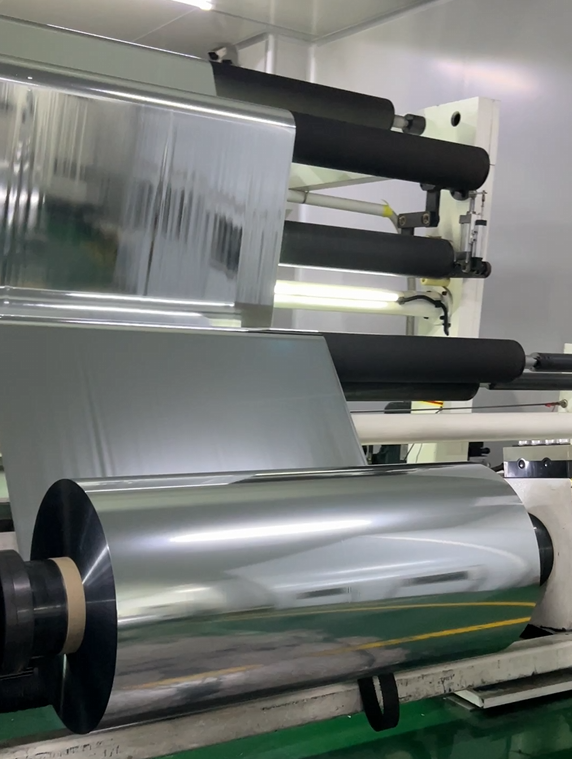
PET AlOx Film and Oxygen Entry at Seals
Nov 10,2026 | FOSHAN CAILONG METALLIC PACKAGING MATERIAL CO.,LTD
A transparent laminate can meet an oxygen transmission target on a flat specimen while a finished pouch with the same film shows a higher oxygen entry rate than expected. PET AlOx film provides a clear oxide coated barrier layer for flexible packaging. An investigation should compare the flat panel, the sealed perimeter and the package geometry before assigning the difference to the coating.
Cailong's film portfolio lists a transparent PET AlOx grade for laminated barrier packaging. Use the current grade data and request the conditions behind any transmission result. The flat film measurement supports material selection. To assess a pouch, identify which paths are represented in the finished package test and how those paths relate to the design.
Start with the units and the specimen
A flat web result is usually expressed for a defined surface area and time. A pouch measurement may instead describe the rate for the complete package. Check the method and units before comparing numbers. Note the temperature, humidity, gas conditions and the orientation of the coated structure in the test. Two reported values can look similar while describing different specimens.
Draw the film area that is actually exposed in the pouch. A gusseted bag has more surface than its face dimensions suggest. Record which areas are covered by seals, folds or other components. Use the actual geometry when estimating the contribution from a nominal flat panel result, and state the assumptions behind that estimate.
Trace the perimeter as a separate path
Mark the side seals, end seal and any intersections. Include spouts, zippers or other features when they are present. The sealed region contains a different arrangement from a flat wall. The design may present a potential route through sealant or through an unintended opening. The importance of those possibilities depends on the actual structure and the test.
Document seal dimensions and the structure on both sides. Ask the laboratory what its whole package method includes and whether it can distinguish a discrete leak from gradual permeation. Keep that scope in the report. A measurement that detects entry for the complete pack does not necessarily locate where the gas entered.
Use area and perimeter deliberately in comparisons
If the converter can produce comparable trial formats, select samples that help separate wall area from seal geometry. Keep material lots, construction and approved processing conditions comparable. Record the changes in pouch dimensions and seal layout. The result can show whether package performance changes with a feature other than flat film area.
Interpreting a comparison requires care. A different bag size can also change forming and handling. A change in the measured rate cannot be assigned solely to the perimeter if several relevant factors changed. Use the comparison as evidence for the next investigation step, and inspect the actual seams and wall samples where the data point.
Check the coated layer after conversion
Retain flat material before lamination and a converted laminate sample. Keep the coating orientation and adhesive record with both. If possible, collect a flat panel from the same finished pouch run. Testing the laminate allows the team to assess whether the barrier changed during conversion before investigating the seam.
Where folds or localized damage are suspected, record the exact sampling position. A coupon taken from a clean flat region can confirm that the panel performs as expected in that region. It leaves a different question about a fold, seam intersection or worn area. Select test specimens that represent the reported condition.
Avoid mixing headspace and transmission measurements
A headspace reading can depend on initial gas, product conditions, time and the package itself. Establish what question the measurement is intended to answer. If it is used to follow a filled pack, record the starting state and the relevant storage conditions. An oxygen transmission test on a separate specimen measures a different part of the system.
When the product protection target depends on the contents, involve the team responsible for the filled pack. Decide which evidence will establish acceptability at the planned storage condition. Compare an equivalent reference pack where available. Keep the material comparison separate from changes to fill, headspace or product preparation.
Confirm seals before changing the film grade
Inspect representative packages for relevant integrity problems using the converter's agreed methods. Record where a defect is found and retain a matching specimen. If a discontinuity is confirmed, address it with the packaging team. A lower flat film transmission value may have little influence on the result if an open route remains elsewhere in the pouch.
Then compare candidate grades on the same construction and the same confirmed sealing arrangement. This gives purchasing a way to see what the barrier web contributes once the other features are controlled. Repeat on production representative samples so that the decision accounts for normal conversion variation.
Document what the package qualification covers
Identify the film grade, gauge, coating orientation and stack. Include flat film and laminate results with their test conditions, plus the finished package geometry and performance. Describe which pouch features the evaluation covers and which changes would require a review. Retain specimens from the actual run if the investigation involves a recurring complaint.
Ask the laboratory to record any masking or fixture contact at the perimeter during testing. An area covered by a holder may contribute differently from an exposed wall. Include that setup when reviewing differences between a coupon and a finished package.
Where the project is replacing an opaque barrier structure to gain product visibility, qualify the intended view and protective requirements separately. The buyer can then compare the transparent PET AlOx option using evidence for the wall, the seal and the completed format. That decision explains why the selected structure works for the package in question and makes future size or seal changes easier to assess.
Comment