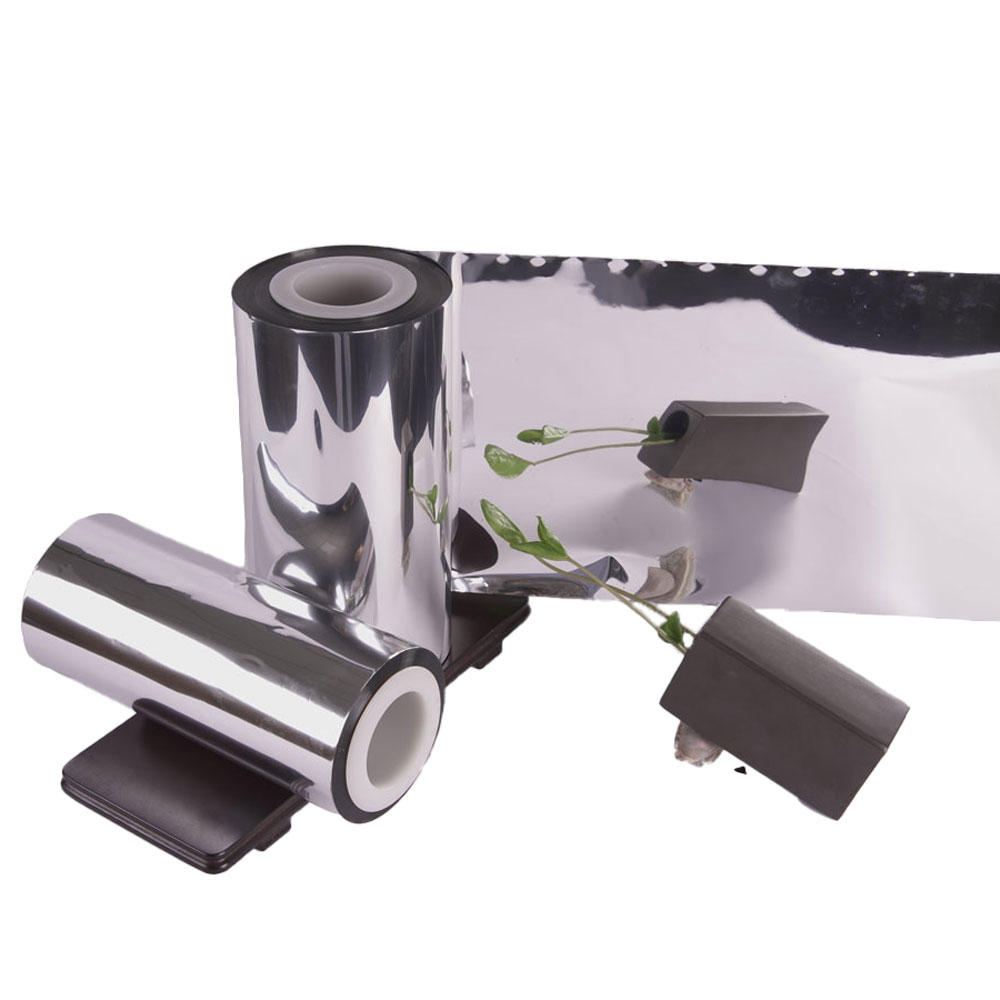
Metallized PET Film: Nip Marks after Lamination
Nov 05,2026 | FOSHAN CAILONG METALLIC PACKAGING MATERIAL CO.,LTD
high adhesion metallized PET film can address a buyer's concern about the bond between deposited aluminum and its PET support. It cannot by itself prevent every mark introduced during lamination. If a finished roll shows repeating impressions after a nip, the converter needs to trace the contact history before deciding that the metallized web is unsuitable.
Cailong's film portfolio includes the high-adhesion metallized PET family for flexible packaging and related applications. Its brochure describes an aluminum layer over a treated PET surface and lists distinct grade references. Those material properties support selection, but they do not qualify the appearance of a laminate produced on a particular roller arrangement. Appearance and metal attachment need separate evidence.
Record the pattern before changing the process
Mark the web direction and map the visible defect across the width and along the roll. Note whether it is periodic, continuous or isolated. Use a consistent light source and viewing angle, because a metallic surface can make shallow disturbances more noticeable under some lighting. Retain photographs with a scale and samples showing the transition from an acceptable area to a marked area.
A repeating spacing may help identify a rotating contact, but it is a clue rather than proof. Compare the measured pattern with the actual machine layout and roller history. Avoid replacing a roller simply because its circumference appears plausible. An investigation should establish where the defect first appears and whether it tracks a specific contact under controlled observations.
Compare samples around the lamination nip
Inspect the incoming metallized web, the companion web and material collected after the relevant contact stages where the process allows safe sampling. Use the equipment manufacturer's approved procedures. Look for the earliest stage at which the mark is visible. A defect present before the nip requires a different investigation from an impression that appears only after the two webs meet.
Retain the same web orientation when comparing samples. The metallic appearance can look different from opposite sides of a laminate, especially with print or adhesive present. Record which face was inspected and which face contacted each roller. Without that orientation record, samples may appear inconsistent even though they show the same physical feature from different directions.
Distinguish an impression from material loss
A shallow texture, a wrinkle, contamination and a locally disturbed metal layer may all produce a visible mark. Examine the defect at suitable magnification and compare both surfaces. Where necessary, use cross-section or surface analysis agreed with the laboratory. Do not label a visual disturbance as aluminum delamination until there is evidence of separation at that interface.
Likewise, an acceptable metal-adhesion result does not prove that the laminate is free of impressions. A bond test measures the response of its specimen under defined conditions. It may not reproduce the localized contact that created the appearance defect. Retain the marked area for examination rather than testing only an unmarked strip from another part of the roll.
Use the grade table rather than a family slogan
The brochure's high-adhesion PET table uses 12 µm reference specimens for VPET-GF and VPET-GF02. Its EAA-method aluminum adhesion entries differ: at least 2.0 N/15 mm for GF and at least 2.5 N/15 mm for GF02. These grade-specific table values should not be replaced by a single higher number applied to every member of the family.
Confirm the selected grade, specimen preparation and failure interface when requesting comparable results. The EAA metal-attachment measurement is not automatically the peel strength of the converter's finished adhesive laminate. Keep the latter result separate, including the adhesive, companion web and cure condition. Neither test supplies a guaranteed tolerance for nip pressure or roller surface texture.
Review contact conditions as a controlled trial
Ask the lamination team to review roller cleanliness, surface condition, alignment and the documented operating arrangement. Assess pressure, temperature and web handling only within the machine and material suppliers' approved limits. Increasing or reducing one setting without recording the others can make a temporary improvement difficult to reproduce and may create another defect elsewhere.
Keep a record of when the pattern changes during startup, a speed transition or a roll change. If the mark follows a particular incoming roll, examine retained samples from that roll as well as the process record. If it follows a machine condition across multiple rolls, investigate that association. The objective is to separate correlation from a demonstrated cause.
Recheck after cure and winding
Inspect the laminate at the relevant cure and storage stages. A mark observed immediately after lamination may change in visibility later, while a feature first noticed after unwinding may involve another contact history. Identify when the surface was last known to be acceptable. This avoids treating every defect discovered on a finished roll as an event that necessarily occurred at the primary nip.
Compare marked and unmarked areas for the properties that matter to the application. A decorative label may have a strict visual acceptance criterion; a barrier package may additionally require protection and bond checks. Visual rejection and functional rejection are separate decisions. An attractive surface cannot demonstrate retained barrier, and a passing barrier result does not waive the customer's appearance requirement.
Build an acceptance sample that purchasing can use
Agree the lighting, viewing distance, acceptable defect examples and relevant sampling locations. Include a retained reference roll or panel where practical. This turns an informal complaint about dull patches or roller lines into a specification that suppliers and converters can discuss consistently.
For a replacement of standard metallized PET, high metal adhesion may be a valid reason to trial this family. Keep that benefit connected to the actual attachment requirement. Resolve nip marks through traced samples and controlled process evidence, then approve the selected grade in the finished laminate. Buying a stronger metal bond should support the package design without being treated as a universal cure for roller-related appearance defects.
Comment