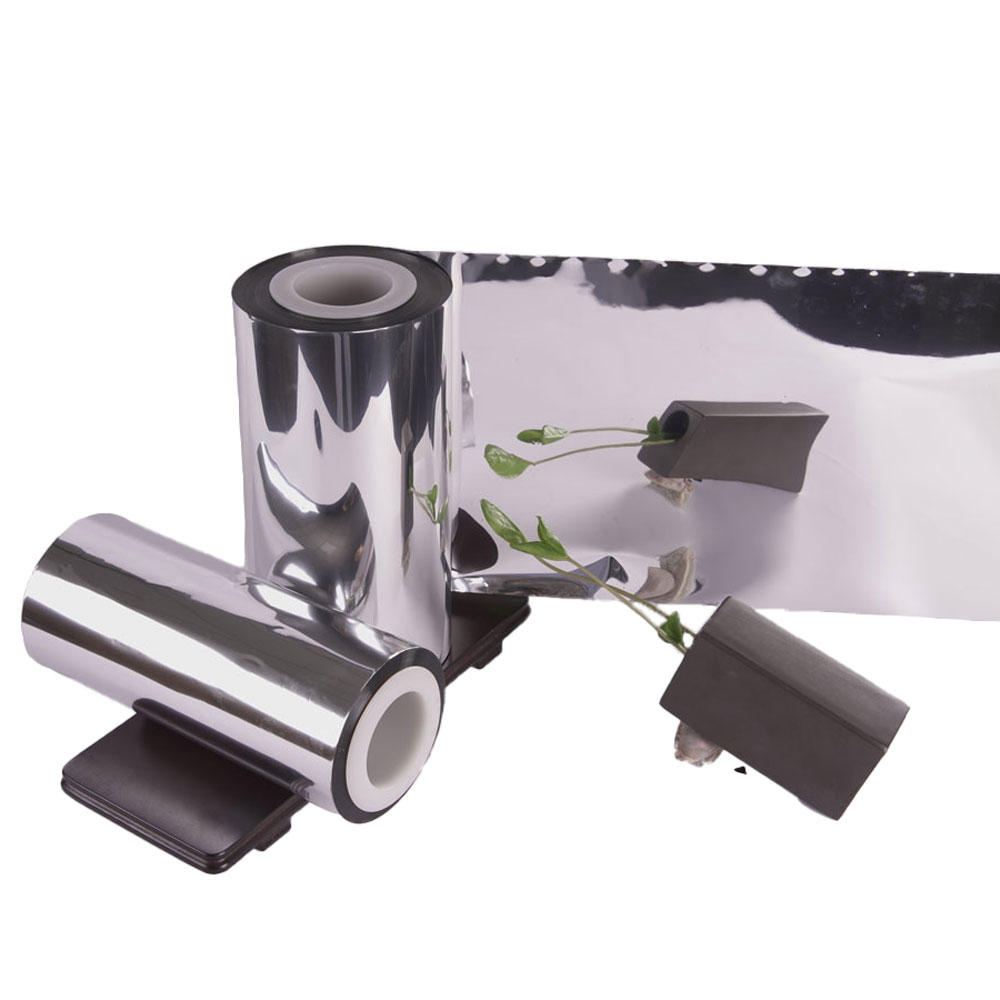
Metallized CPP Film: Seal Strength after Aging
Nov 04,2026 | FOSHAN CAILONG METALLIC PACKAGING MATERIAL CO.,LTD
metallized CPP film is considered for flexible packaging that needs a metallic appearance and sealing capability. A seal that looks sound just after the machine stops, however, does not establish its behavior after the pouch has been stored. Buyers should specify when seal strength is measured and what happens to the pack between sealing and that measurement.
Cailong's film portfolio lists both general and high-adhesion metallized CPP options, with low-temperature sealing described as a product characteristic. The published page does not supply a universal seal-aging curve or a guaranteed sealing window for every laminate. Evaluate the chosen grade, sealant contact and converted structure rather than extending one fresh test result across an unspecified storage period.
Separate immediate sealing behavior from stored-seal strength
Hot tack concerns the ability of a newly formed seal to resist opening while it is still hot. A cooled-seal test examines another condition. A seal tested after defined storage has a further history. Name those measurements separately so that an acceptable hot-tack result is not presented as proof of long-term closure strength, or vice versa.
Record the elapsed time from sealing to specimen preparation and testing. An instruction saying test after production can cover very different intervals across shifts or laboratories. Define a practical schedule linked to the decision, and keep it consistent for incumbent and candidate materials. If the commercial problem appears later, include that relevant stage rather than testing only convenient fresh samples.
Establish a reproducible initial seal
Identify which faces form the seal and retain the full layer construction. The metal-bearing side, an uncoated film side and a separate laminated sealant are not interchangeable. Ask the converter to confirm the actual interface. A test cannot explain a grade change reliably if the sample record does not show what materials were joined.
Record temperature, pressure, dwell and the condition of the jaws or sealing tooling. Keep operating settings associated with the equipment used. The temperature displayed on one machine does not establish an identical interface condition on another. Before investigating aging, verify that initial seals were produced through a repeatable process with representative surfaces and geometry.
Define storage as part of the test
Specify temperature, humidity, duration and whether specimens are stored as sealed strips, empty pouches or filled packages. Each arrangement can answer a useful question, but they are not equivalent. A flat unloaded strip can miss stresses and product contact present in a filled pouch. Identify the arrangement that represents the suspected failure and retain suitable controls.
Keep packages protected from unintended handling during a storage comparison. If one set is folded, stacked under load or transported while another remains flat, the investigation includes those effects as well as elapsed time. Record deliberate exposures separately. This helps the team distinguish a material change over time from mechanical damage introduced by the way samples were stored.
Preserve the failure mode with the force result
Examine whether the closure opens at the sealing interface, tears through a web or separates at a laminated or metallized interface. Report that observation with the measured force. A high number can describe web tearing rather than a stronger seal interface. A lower number may represent an intended peel behavior in another application, so the required opening mode matters.
Record the test-strip dimensions, pulling arrangement, speed and relevant conditioning under the agreed method. Align specimen location with the seal drawing. Sampling only a broad straight section can miss a vulnerable seal intersection or a region affected by product contamination. Where geometry prevents an equivalent strip test, agree on a complementary package-level assessment instead of forcing an invalid comparison.
Investigate a change without assuming its cause
If strength changes with storage, inspect the failed surfaces and compare them with earlier specimens. Review seal formation, laminate cure where relevant, contamination and exposure to the packaged product. The change should trigger an investigation, not an automatic conclusion that metallized CPP always weakens or always strengthens over time. The available product information does not support either universal statement.
Use a controlled comparison to isolate a suspected factor. For example, matched seals with and without the relevant product contact can help investigate that exposure. Keep the film lot and sealing process consistent. If several materials and process conditions are changed together, an improved result may still be useful commercially, but it will not identify which change resolved the original mechanism.
Check integrity alongside mechanical strength
Select suitable leak or integrity checks for the intended pack. A tensile strip test samples a defined portion of the closure and does not establish that the whole pouch is free of channels. Conversely, a leak check does not provide the same information as an opening-force or seal-strength measurement. Choose complementary evidence around the customer's actual loss of protection.
When the pouch contains oxygen- or moisture-sensitive goods, evaluate the protection required after relevant storage and handling. Keep intact-film barrier references separate from closure integrity. A stronger stored seal does not prove that the barrier layer remained undamaged, and a good film transmission result does not resolve a defective seal region in the finished pack.
Agree on the release and retention criteria
The purchasing specification should identify the CPP grade, supplied surfaces, converted construction and the conditions used to qualify the seal. Define any release test needed before shipment and the later retention test used to monitor stored performance. Preserve retained samples and their histories so a later complaint can be compared with the relevant production lot.
This gives the converter a practical basis for evaluating metallized CPP as a material option. Its published sealing characteristics support trials, while the customer's process establishes the actual closure. Measuring the right property at defined intervals makes a seal-strength comparison useful for purchasing and helps ensure that a fresh approval remains relevant when the package reaches its user.
Comment