Metallized PET Film: Air Gaps in Thermal Packs
Nov 04,2026 | FOSHAN CAILONG METALLIC PACKAGING MATERIAL CO.,LTD
reflective PET film can be attractive to a thermal-packaging designer because of its reflective appearance. However, a shiny layer inserted between two contacting materials does not automatically produce a specified insulation value. The buyer needs to identify how heat crosses the complete pack, which surface faces an air space and whether that space remains present during actual loading and transport.
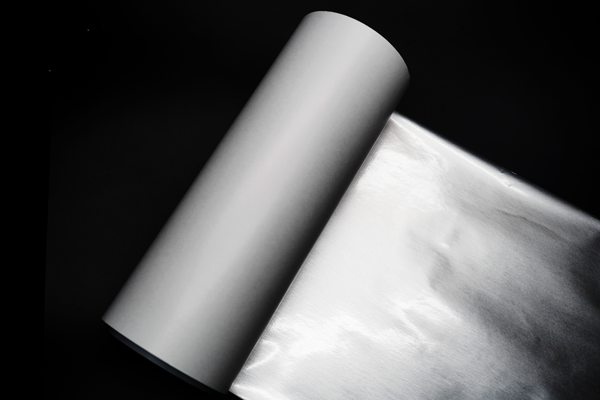
Cailong's film portfolio lists a reflective PET metallized product in matte-silver and bright-silver versions. Its published information supports discussion of the film's surface and material characteristics. It does not provide a qualified hold time or thermal resistance for a finished shipping pack. Those outcomes must be established using the intended construction, contents and temperature exposure.
Distinguish radiation from the other heat paths
Heat can cross a package through solid contact, moving air and radiation. A reflective surface is considered for its effect on radiative exchange, while foam, fiber, trapped air and other structural features address the complete heat-transfer problem. A material can contribute to one path without eliminating the others, particularly at seams, closures and compressed regions.
The US Department of Energy's education page on insulation types explains the role of adjacent air spaces in reflective insulation. The principle helps frame a packaging trial, although the source concerns buildings. Its installation dimensions and performance descriptions should not be transferred into a specification or thermal claim for Cailong film or a transport pack.
Draw the actual interfaces in the pack
Prepare a section drawing showing the product, coolant where relevant, liner, reflective film, supporting insulation and outer container. Mark areas of direct contact and intended cavities. A film bonded on one face can still present another face toward an air space, but that arrangement needs to be identified. Simply listing metallized PET in the bill of materials leaves the optical interface unclear.
Check whether print, adhesive, a protective layer or another film covers the reflective surface. The thermal behavior depends on the surface exposed toward the cavity, not just the metal somewhere inside the laminate. Ask for suitable surface-property evidence if it is needed for a model. Visible gloss or a visible-light reflectance reference alone does not supply infrared emissivity across all wavelengths.
Examine the loaded geometry rather than the empty sample
A cavity shown in an unloaded prototype may disappear when the pack is filled, strapped or stacked. Map likely contact points with representative contents and supports. Flexible constructions can touch locally even if the nominal design contains a gap. Record those regions because solid contact changes the route by which heat can cross the assembly.
Allow for dimensional variation in the contents and container. A design that relies on one carefully positioned sample may be difficult to reproduce on a packing line. Evaluate how operators place the liner and how the load moves in distribution. The aim is a repeatable assembled condition, not a favorable arrangement that exists only during a laboratory photograph.
Avoid converting appearance into an insulation rating
The reflective-film product page includes reference optical information, but a reflective appearance is not a measured R-value for the pack. Thermal resistance belongs to a defined specimen and test arrangement. Do not assign a value to a loose film by borrowing the rating of a foam laminate, reflective bubble structure or another supplier's finished insulation product.
Similarly, a thermal image of a shiny surface can be misleading if the measurement does not account for emissivity and reflected surroundings. Choose temperature sensors and placement methods appropriate to the investigation. A cooler-looking image is not sufficient evidence that the contents received less heat or remained within their required temperature limits for a longer time.
Design a comparison that isolates the proposed benefit
Compare the incumbent assembly with a candidate containing the reflective film while keeping geometry, load and exposure consistent. If the trial also adds more bulk insulation or changes coolant mass, record those changes. Otherwise, an improved result cannot be attributed specifically to the film or to the presence of an adjacent cavity.
Where useful, compare the intended cavity with a representative contact condition. This can reveal how sensitive the construction is to compression or packing variation. Define the comparison with the laboratory rather than improvising an extreme condition unrelated to use. The important result is whether the proposed feature contributes under the load and handling conditions the buyer expects.
Measure the locations that protect the contents
Choose monitoring locations according to the product's requirements, including vulnerable positions near closures, corners or contact regions. An average temperature can hide a local excursion. Keep sensor type, attachment and starting condition consistent between trials, and confirm that the measurement arrangement does not itself create an unintended air space or thermal bridge.
Report the full time-temperature traces alongside the agreed acceptance criterion. Include exposure profile, duration, load configuration and conditioning. The reflective PET supplier's material information cannot replace these pack-level details. A hold-time statement is meaningful only for the construction and test conditions that produced it, with suitable consideration of variation and repeatability.
Keep converting and handling requirements in the decision
Evaluate whether the film can be incorporated without unacceptable wrinkling, surface damage or separation. Check the relevant bond and closure design on production-representative packs. If the reflective surface is exposed inside a cavity, define handling and cleanliness requirements for that surface. An optical or thermal candidate still needs to survive the converting route used to make the pack.
Reflective metallized PET can therefore be assessed as one defined element in a thermal construction. The purchasing case becomes stronger when it explains the intended interface, preserves that interface under load and demonstrates a useful temperature outcome. That evidence allows the buyer to compare the material with alternatives without relying on shine as a substitute for insulation performance.
Comment