
Metallized PET Film for Coffee Capsule Lids
Oct 12,2026 | FOSHAN CAILONG METALLIC PACKAGING MATERIAL CO.,LTD
Metallized PET Film may enter a coffee capsule lid evaluation when a converter is reviewing a multilayer alternative to the present barrier construction. However, a lid must do more than protect dry coffee before use. It must close onto the specified capsule and behave correctly when the brewing system opens or challenges it. A film that performs well in a flexible pouch is not automatically a qualified capsule lid.
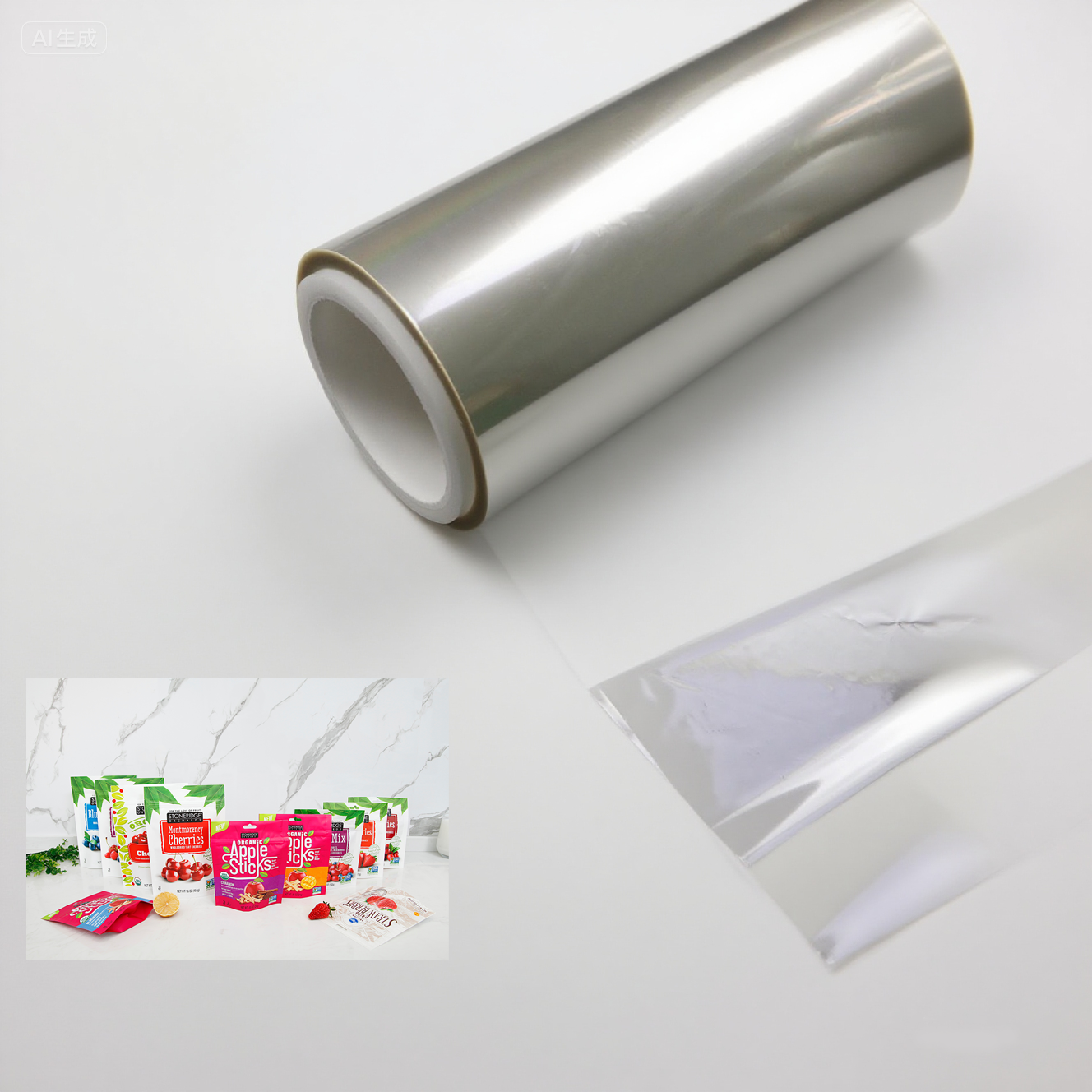
Cailong's Metallized Film Supplier range identifies VPET-GF as a high-aluminum-adhesion PET grade for lamination. That characteristic supports an interface-focused material discussion. The product page does not establish capsule-lid compatibility, a piercing result or approval for a brewing cycle. Treat it as a candidate web while the converter and capsule system owner qualify the finished construction.
Identify the capsule system before the material
Provide the capsule resin or construction, flange drawing and lid attachment method. The surface that receives the seal is as important as the barrier web above it. A sealing layer suitable for one capsule should not be transferred to another simply because both are used for coffee. Keep the exact flange material and any surface treatment identified in the trial request.
Also define how the system opens the lid. A lid pierced by a component in the machine needs a different assessment from one peeled away by the consumer or opened through another mechanism. Specify the required opening zone and function without assigning arbitrary acceptance values. This prevents a convenient pouch or peel test from being used to approve the wrong capsule-lid duty.
Metallized PET Film supplies only part of the lid
A proposed printed web / adhesive / VPET-GF / adhesive / capsule-compatible sealing layer is one structure for evaluation. The outside web carries decoration and handling support, metallized PET contributes the intended barrier, and the closing layer must work with the defined flange. The converter must confirm the materials and gauges. This is a conceptual laminate, not a validated Cailong lid specification.
Keep all adhesive and product-contact requirements with that construction. Better aluminum anchorage does not establish the behavior of an added adhesive or sealing layer. The completed lid introduces interfaces that are absent from the bare film. Each should be reviewed against coffee storage, manufacture and the intended use condition rather than approved from the barrier grade's name alone.
Coffee storage and capsule closure are separate questions
Define the coffee format, fill quantity and quality criteria before selecting the barrier target. Include the product's packing history and any atmosphere-control process used by the capsule maker. A low incoming oxygen result and a favorable panel OTR do not describe every potential exposure through the assembled capsule. The shell and flange closure are part of the same protection system.
Request barrier data for the candidate lid laminate under the agreed conditions, then assess assembled-capsule integrity separately. Inspect the flange for coffee particles or another interruption to the closing interface. A higher-barrier metallized web cannot remove a leak created by contamination or incomplete contact. Keep panel transmission and closure defects distinct when evaluating storage complaints.
Opening behavior cannot be assumed equivalent to foil
If the existing lid contains foil, describe how it currently opens in the system. A PET-based laminate can deform and tear differently from a foil construction. That difference is a functional selection issue, not merely an appearance change. Do not claim that VPET-GF replaces foil until the new complete lid meets the relevant opening and capsule requirements.
Use the actual opening mechanism and support arrangement in trials. Inspect the opening location, surrounding material and any unwanted fragments or deformation. A result obtained with a convenient laboratory probe may not reproduce the machine's contact. If the opening requires more force or follows a different path, review the laminate and geometry rather than treating higher film toughness as automatically beneficial.
Assess the lid through the declared brewing route
The capsule system owner should provide the use conditions relevant to qualification. Evaluate the completed lid and capsule against that route, including the required closure and opening behavior. A general heat-resistance description for a polymer is not approval of the whole brewing assembly. The selected sealing layer and adhesives also need appropriate evidence for the intended conditions.
Inspect the construction after the agreed sequence for bond changes, lifting at the flange and damage outside the intended opening zone. Keep samples and observations associated with the actual laminate and capsule. If a trial fails, identify which interface or material region is involved before choosing a different barrier web. This makes the next material request more specific than “stronger capsule film.”
Manufacturing geometry can control the result
Review how the lid is cut, presented and attached. A burr, fold or alignment error near the flange can change the completed closure even when the incoming laminate is consistent. Include representative tool positions and actual feed orientation where they affect the trial. The capsule-lid process should preserve the intended interfaces through cutting and assembly.
Compare the existing lid and the candidate in the same manufacturing and use assessment. Record storage protection, closing performance and opening behavior separately. If one candidate improves an interface but fails another required function, it is not an equivalent replacement. Retaining the current construction can be the appropriate outcome while the converter investigates a different material or geometry.
Include capsule storage orientation in this assessment. Contact between the coffee and lid, handling before brewing and transport movement can create different conditions from an empty closure sample. Use filled capsules when evaluating the intended construction.
For a VPET-GF capsule-lid discussion with Cailong, send the present lid structure, capsule flange material, attachment route and opening mechanism. Include the coffee packing condition, proposed use requirements and retained specimens from relevant failures. Ask for film information and samples for the converter's defined trial, while keeping capsule and brewing-system approval with the responsible teams.
Comment
-9.png?w=1000&h=620)
.jpg?w=1000&h=620)