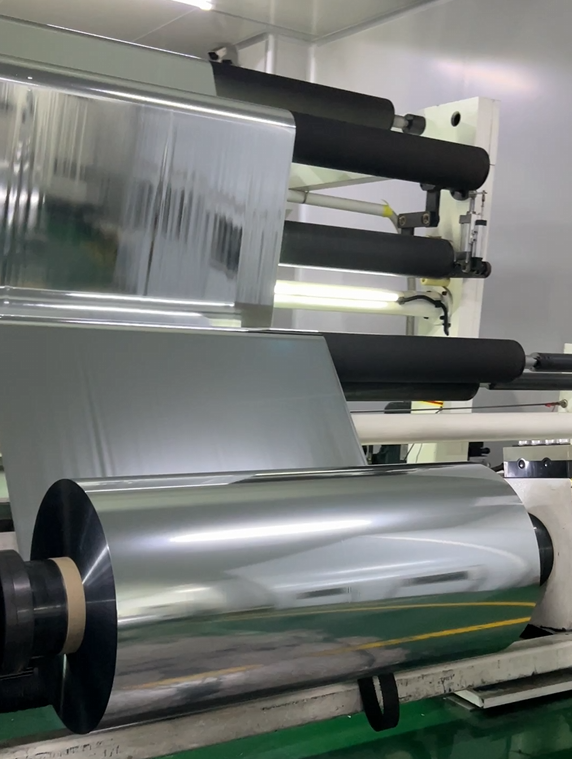
Metallized PET EVA for Laminated Book Covers
Nov 14,2026 | FOSHAN CAILONG METALLIC PACKAGING MATERIAL CO.,LTD
A metallic book cover may leave a thermal laminator flat and begin curling after it cools or sits in a stack. If the cover no longer aligns with the book block, the problem can affect binding, trimming and the appearance of the finished book. A buyer testing metallized PET EVA film should compare bonding and flatness on the actual printed board. A good bond measured immediately after lamination answers only part of the question when the cover must remain usable through the rest of production.
Cailong's film portfolio describes an EVA-coated metallized PET construction for thermal lamination to paper or other films. It lists customized thickness and width. Ask for the offered gauge, coating face and process guidance before making samples. The intended board, ink and cover construction determine how the laminate will behave in the project. Use actual printing and board from the job where possible so the trial reflects how the final cover is made.
Characterize the cover before lamination
Record the board grade, thickness and grain direction used in the cover. Mark the front, back and orientation of each blank. Check its initial flatness after the normal conditioning interval. A warped blank can make a thermal laminate appear responsible for curl that was already present. Retain unlaminated blanks from the same batch and store them alongside the trial covers.
Use the representative printed design, including heavy ink coverage and areas where the laminate crosses bare board or a lighter print. Confirm that the converter has reached the approved state for lamination. If the trial is performed on unfinished board while production uses a fully printed cover, any comparison of bond or curl has a narrower scope. Identify the print process and time since printing in the test record.
Compare the laminate at the intended operating point
Use the same board orientation and laminate position for the first group of samples. Record the converter's approved operating settings and the sequence used to prepare the covers. Include an incumbent laminate or the accepted construction for a similar cover where it provides a relevant comparison. Mark samples collected near startup separately from samples made after the process has stabilized.
Inspect the surface and edges as the cover leaves the machine. Look for visible air pockets, incomplete contact or local marks. Check a heavily printed area and a less heavily printed area. If a defect follows the print rather than the edge of the laminator, retain examples of both zones and compare them after cooling. A uniform-looking metallic surface can conceal a local bond difference that appears only during later trimming or folding.
Measure curl after handling and storage
Choose the support surface and cover orientation used for the flatness check. Record which corners lift and in which direction the cover bends. Check the piece after the normal cooling period and again after the expected interval before binding. A piece placed under weight immediately after lamination can look different from a piece held loose. Record both handling routes if the production process uses them.
Compare the laminated cover with the unlaminated reference. If the direction of bending changes when the board orientation changes, examine the board and laminate orientation together. If only the newly laminated group changes during storage, compare how the groups were conditioned. Establish which observation will determine acceptance. A single result measured immediately after a sample is removed from a press cannot describe the cover as it arrives at the binding station.
Include spine, trim and opening checks
Make several trial covers with the intended scoring or folding geometry. Inspect the metallic layer and board bond around the spine and at the trimmed edges. Where the cover opens repeatedly, use the established project handling test and record the appearance at the relevant locations. A cover can remain flat on the table while the score creates an unacceptable line or starts a separation at one edge.
Place the cover on the intended book block or a representative assembly. Inspect the alignment at the fore edge and along the spine. Record whether the opening behavior is affected by a particular region of the cover. If the same laminate will be used on several cover formats, include the size most sensitive to curl and the tightest fold in the approved range. Do not assume a successful small sample will represent a much wider cover.
Turn the comparison into a material specification
Give the supplier the proposed film width, gauge and EVA face, together with the paper or board construction. Include information on the actual printing and the converting route. Ask for the samples and data needed to qualify the offered construction. If the supplier quotes the laminate web only, specify who will verify it on the cover and which finished dimensions apply.
Retain an accepted cover, an unlaminated blank and a converted strip from the same run. Record the cooling and storage sequence alongside the adhesion and flatness observations. If a later order changes the board lot or the artwork, use the retained set to determine which parts of the qualification should be repeated. That provides a purchasing reference for a cover that can be laminated, bound and handled at the required quality.
If the cover uses a printed inside face as well as the metallic exterior, preserve that full construction in the trial. The inside finish may influence how the board responds during conditioning. Compare complete covers before transferring the result from a single-sided sample to the production order.
Where finished covers are stacked with alternating orientations, compare the bottom and upper samples after the normal storage interval. Stack load may keep some pieces flatter temporarily. Allow the samples to reach the agreed inspection condition before deciding whether their shape is acceptable.
Comment