Designing EMI Shields with Double-Side Metallized PET Film
Sep 09,2026 | FOSHAN CAILONG METALLIC PACKAGING MATERIAL CO.,LTD
A conductive film can show low surface resistance yet provide weak shielding if seams, contacts and grounding are poorly designed.
Review the Double-Side Metallized PET Film page, explore the manufacturer website, and compare the related material range before fixing the trial specification.
Surface resistance is not shielding effectiveness
Sheet or surface resistance describes conduction along a surface under a stated method. Shielding effectiveness describes attenuation in a defined frequency range and test geometry. The numbers are related but not interchangeable. Buyers should avoid selecting film from one resistance value without defining the enclosure, field source and required attenuation.
Why metallization on both sides matters
Two conductive faces can simplify contact strategies or provide redundancy when a converted part must connect on either side. The advantage depends on edge design and whether the two surfaces are electrically connected in the assembly. If the faces remain isolated by the PET core, the designer must decide how current reaches the intended ground path.
Seams and apertures dominate many failures
A shield is only as continuous as its joints, cutouts, vents and cable entries. Narrow overlaps, weak pressure contacts or insulating adhesive can interrupt current flow. Prototype the actual geometry and measure resistance across every joint. A large flat coupon can hide the leakage paths created during die cutting and assembly.
Conversion without damaging the metal
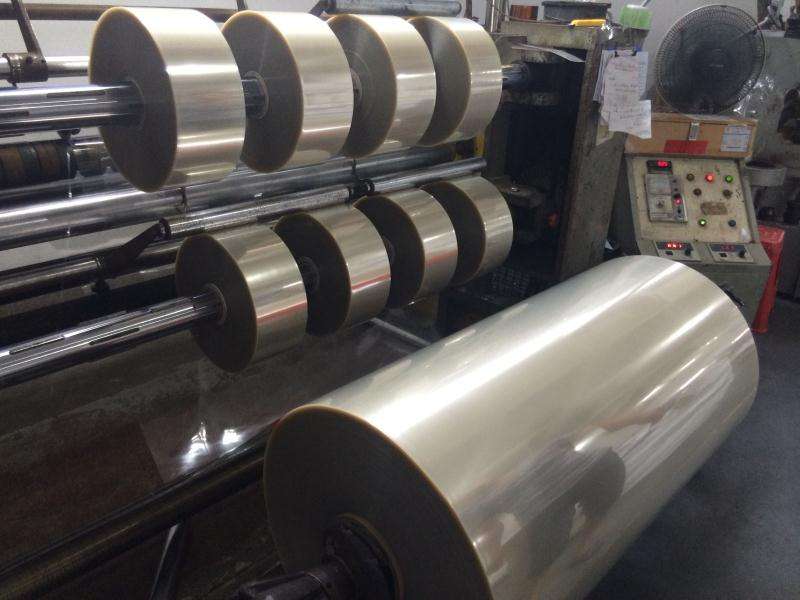
Slitting, punching, folding and lamination can scratch or crack thin metal layers. Control tool condition, web handling and particulate contamination. If adhesive is applied, decide whether it must conduct or remain outside the contact zone. Inspect both faces after conversion and confirm contact pressure after environmental cycling.
Build the test around the frequency problem
Define the frequency range, source, distance, grounding and pass criterion before choosing a film. Test the finished shield or representative enclosure, not only the material coupon. Add humidity, thermal cycling and vibration if they can loosen contacts or change resistance. Document the same setup for supplier and customer samples.
Evidence needed before approval
Define the test method, sample preparation, conditioning and acceptance limit before comparing materials. Ask whether each reported value comes from an untouched film, a converted laminate or a finished component. These are different evidence levels. Repeat the most important tests after the process steps that can damage or change the material. Include samples from the beginning, middle and end of a representative roll or production run. Record failures as well as averages, because an isolated weak location can matter more than a strong mean value in demanding applications.
Do not add unsupported specifications simply to make the purchasing document look complete. Use confirmed supplier data where available, and mark package-level or assembled-part requirements as customer validation. If a property such as barrier, dielectric behavior, adhesion or dimensional stability is critical, state the temperature, humidity, frequency, direction, thickness and other test conditions that affect interpretation. This makes quotations comparable and reduces disputes after the first production trial.
Keep a control made from the current approved material and process it beside the new candidate whenever possible. Label every sample with the material lot, machine, date and process settings. A side-by-side control shows whether a change comes from the new film or from ordinary production variation. Review the result with production, quality and purchasing teams before changing the specification. Record the final reason for selection, open risks and responsible owner for each remaining test. Preserve these detailed records for repeat orders, supplier reviews, future scale-up decisions and later process changes.
Before full production, confirm incoming inspection items and the response plan for an out-of-specification result. Define who reviews the evidence, whether material is quarantined and which retained sample will be used. Clear responsibilities prevent a technical concern from becoming an uncontrolled production delay and give both buyer and supplier a practical route for corrective action.
Commercial next step
Send the current material or structure, target thickness and width, annual demand, delivery destination, process conditions and test requirements. Include failed samples, photographs or drawings when troubleshooting. Ask for a project-specific sample and quotation rather than a general catalogue request.
Agree on the trial quantity, decision date, responsible test laboratory and production scale-up route. Keep lot identity and process records from sampling through approval. This gives the supplier enough information to support a real sourcing decision and helps the buyer compare total conversion risk, not only unit price.
Frequently asked questions
Does low sheet resistance guarantee good EMI shielding?
No. Geometry, seams, apertures, grounding and frequency strongly affect the assembled result.
Are the two metal faces automatically connected?
Do not assume this. Verify the supplied construction and design an edge or contact method when electrical connection is required.
Can ordinary adhesive be used?
It may insulate the contact path. Select adhesive placement and conductivity according to the shield design.
What should an RF engineer send for sampling?
Provide frequency range, target attenuation, part drawing, grounding method, conversion steps, width and demand.
Discuss your project
Contact the technical sales team with your application, current problem and planned volume. A focused inquiry allows the supplier to recommend a relevant film grade, prepare sample dimensions and identify the validation work still required.
Comment