Cailong PLA Metallized Film & PLA Alumina Oxide Film: The High-Barrier, Fully Biodegradable Answer to Single-Use Plastic Bans
Jul 17,2026 | FOSHAN CAILONG METALLIC PACKAGING MATERIAL CO.,LTD
For years, the packaging industry faced an impossible choice: stick with high-performance petroleum-based plastics and ignore environmental guilt, or switch to "green" materials that often failed in moisture resistance, shelf-life extension, or machinability. That compromise ends today. Enter Cailong PLA metallized film and Cailong PLA alumina oxide film – two revolutionary products that prove sustainability and superior functionality are not mutually exclusive.
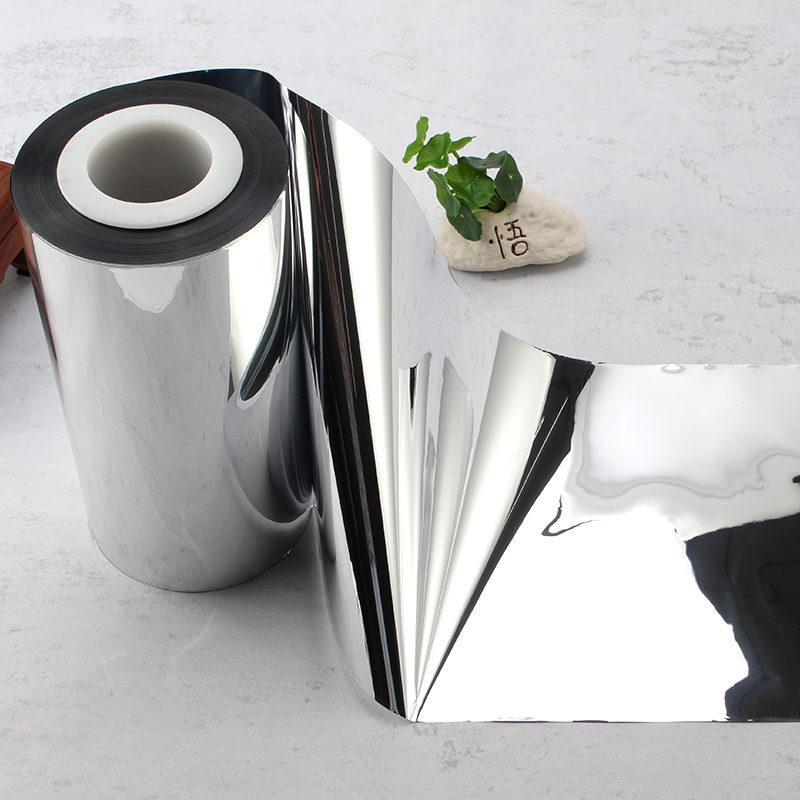
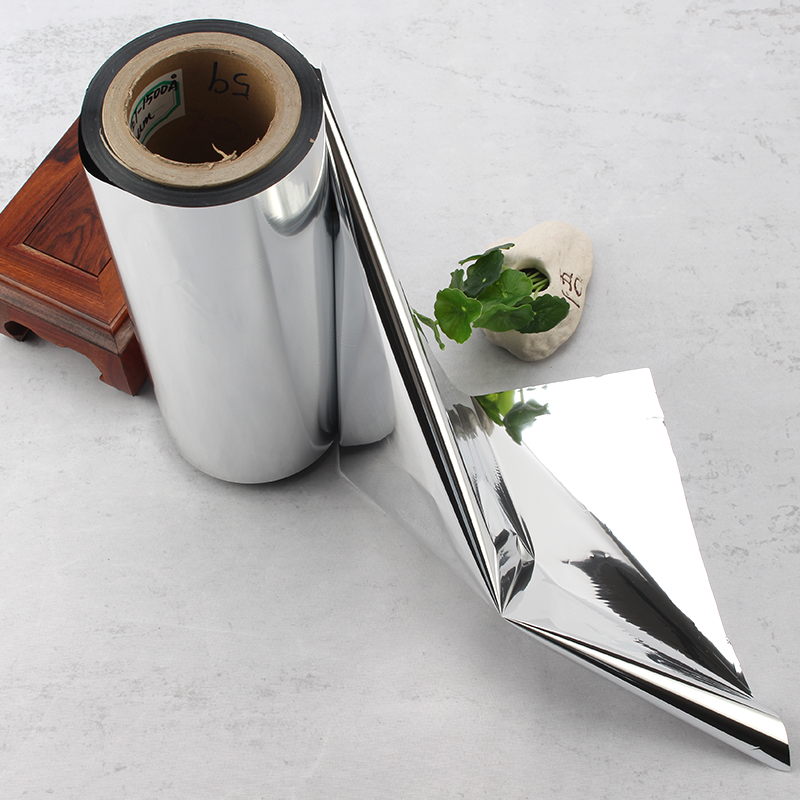
Cailong New Materials has harnessed advanced vacuum deposition technology to transform standard polylactic acid into a powerhouse of barrier protection. Whether you choose the reflective, light-blocking Cailong PLA metallized film or the crystal-clear, oxygen-scavenging PLA alumina oxide film, you are adopting a material that fully degrades in industrial composting while outperforming many conventional plastics in real-world applications.
The Core Dilemma: Why Most "Biodegradable" Films Fall Short
Standard PLA films are celebrated for being bio-based and compostable, but their inherent porosity and heat sensitivity often limit them to dry, low-value goods. A bag of chips made with plain PLA might go stale within weeks; a coffee pouch could lose its aromatic punch before reaching the retailer. Furthermore, many coated biodegradable films use chemical adhesives that compromise compostability.
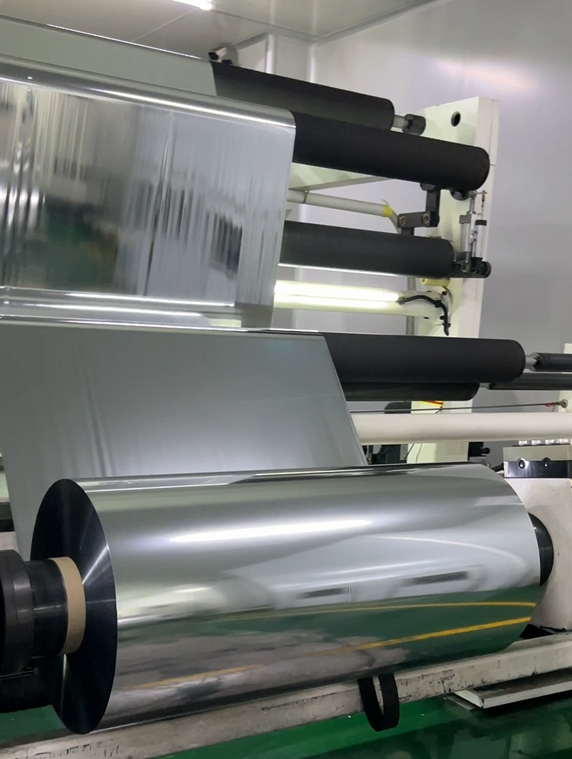
Cailong PLA metallized film and PLA alumina oxide film solve these problems at the molecular level. Instead of adding non-degradable layers, Cailong applies an ultra-thin aluminum or aluminum oxide coating directly onto the PLA substrate via high-vacuum evaporation. This process maintains the film's biodegradability certificate while slashing oxygen and moisture transmission rates to levels that rival traditional metallized PET or OPP.
Technical Excellence Backed by Verified Data
For procurement specialists and packaging engineers, claims must be backed by numbers. Cailong delivers exactly that. The VPLA-GF02 grade (Cailong PLA metallized film) – typically 40μm thick – exhibits an aluminum layer thickness of 2.0 OD, ensuring consistent reflectivity and barrier. Its oxygen transmission rate (OTR) is just 3.0 cc/m²·24h (ASTM D-3985), and water vapor transmission (WVTR) is a mere 2.50 g/m²·24h (ASTM F-1249).
For transparent packaging needs, the PLA-AlOx grade (PLA alumina oxide film) – available at 25μm – provides an OTR of 25 cc/m²·24h and WVTR of 10 g/m²·24h, which is exceptionally low for a clear, un-metallized biodegradable film. Both versions share a density of 1.26 g/cm³ and a surface tension of 44 mN/m, making them ready for high-speed gravure and flexographic printing without corona pre-treatment.
Mechanical robustness is equally impressive. Tensile strength for Cailong PLA metallized film reaches 117 MPa (MD) and 126 MPa (TD), while the alumina version hits 108 MPa (MD) and an outstanding 150 MPa (TD). This means these films can withstand the rigors of vertical form-fill-seal (VFFS) machines without snapping or stretching out of specification. The heat sealing strength (7.5 N/15mm for metallized, 7.2 N/15mm for AlOx) guarantees secure closures even at moderate temperatures (85°C/80°C), reducing energy consumption during packaging operations. Additionally, the aluminum layer adhesion is rated Grade 1 under the rigorous 3M600 tape test—no flaking, no delamination.
Application Deep Dive: Where Cailong PLA Coated Films Excel
Let’s move beyond theory and look at specific use cases where Cailong PLA coated films are making an immediate impact.
1. Premium Coffee and Spice Packaging
Coffee beans and ground spices are highly sensitive to oxygen, light, and moisture. Cailong PLA metallized film acts as a superior light-barrier, preventing UV rays from degrading essential oils. When laminated with kraft paper, this sustainable flexible packaging creates a rustic, artisanal look that appeals to eco-conscious consumers while extending the product's peak freshness from weeks to months. Major roasters are already replacing foil-lined bags with Cailong’s solution to meet EU’s Packaging and Packaging Waste Regulation (PPWR) requirements.
2. Dried Meat, Nuts, and Snack Foods
For jerky and trail mixes, rancidity is the primary enemy. The exceptional OTR of PLA alumina oxide film provides an invisible shield against oxidation. Unlike metalized films that obscure the product, the transparent PLA AlOx allows consumers to see the actual contents—a crucial marketing advantage for premium brands. At the same time, its high WVTR resistance ensures that hygroscopic snacks don’t turn soggy in humid climates.
3. Pharmaceutical Blister and Sachet Packaging
Though still emerging, Cailong PLA metallized film is gaining traction in moisture-critical pharmaceutical sachets. The combination of high barrier and guaranteed biocompatibility (PLA is FDA-approved for food contact) makes it a viable candidate for single-dose powder or tablet packaging, particularly for over-the-counter wellness products targeting green consumers.
4. Composite Laminates with Paper
The synergy between Cailong PLA coated films and paperboard is exceptional. In paper-plastic composite bags, the PLA film provides the heat-sealable inner layer while the paper offers stiffness. This hybrid structure is fully recyclable in paper streams (since the PLA film can be separated via repulping) or fully compostable in industrial facilities, offering brands a versatile end-of-life narrative.
Why Cailong Stands Out in the Green Packaging Landscape
The market is flooded with "green" claims, but Cailong distinguishes itself through vertical integration and process control. By owning the entire metallization/coating process specifically for PLA substrates, the company ensures that the thermal shrinkage—critical for lamination stability—is meticulously managed. At 100°C/10min, the Cailong PLA metallized film shows just 4.0% shrinkage (MD) and 1.2% (TD), while the AlOx grade shows 4.1% (MD) and 3.1% (TD). This low-shrink characteristic prevents wrinkling and tunneling during multi-layer lamination, saving converters substantial material waste.
Furthermore, Cailong offers flexibility in thickness and roll dimensions, catering to both small-batch specialty runs and mass-production scale. Their commitment to quality control means every roll of Cailong PLA metallized film or PLA alumina oxide film leaves the factory with stable wetting tension and defect-free coating.
The Economic and Regulatory Case for Switching Now
Delaying the transition to biodegradable materials is becoming increasingly costly. With plastic taxes expanding across Europe, North America, and parts of Asia, switching to Cailong PLA coated films offers a hedge against regulatory fines and improves brand equity among Gen Z and Millennial shoppers, who actively seek out compostable packaging. While the current cost-per-kilogram of PLA might be slightly higher than conventional plastics, the total cost of ownership is decreasing as waste management fees for non-recyclable plastics soar. Additionally, the lightweight nature of Cailong PLA metallized film reduces transportation emissions, contributing to Scope 3 carbon reduction goals.
Future Horizons: Beyond Conventional Packaging
Looking ahead, Cailong is exploring applications in agricultural mulching films, where PLA alumina oxide film could regulate soil temperature while biodegrading at the end of the crop cycle, eliminating the need for costly plastic retrieval. In the 3D printing sector, metallized PLA filaments are emerging for decorative prototypes. Cailong’s R&D pipeline also includes enhanced heat-resistance grades to broaden the application window for hot-filled products.
Conclusion: Partner with Cailong for a Credible Green Transition
Biodegradability should never be an excuse for poor performance. With Cailong PLA metallized film, you get unmatched oxygen and moisture protection; with PLA alumina oxide film, you gain crystal-clear visibility with superior shelf-life extension. Both are industrially compostable, printable, sealable, and tough enough to replace legacy plastics in demanding applications.
The future of packaging is circular, renewable, and high-performance. Don’t let outdated bioplastics hold your brand back. Choose Cailong – the new material standard for a cleaner planet.
Comment