Copper Metallized Film: The Game‑Changing Conductive Material That Solves Weight, Flexibility, and EMI Challenges
Jul 23,2026 | FOSHAN CAILONG METALLIC PACKAGING MATERIAL CO.,LTD
1. The Industry Dilemma: Why Traditional Copper Foils Fall Short
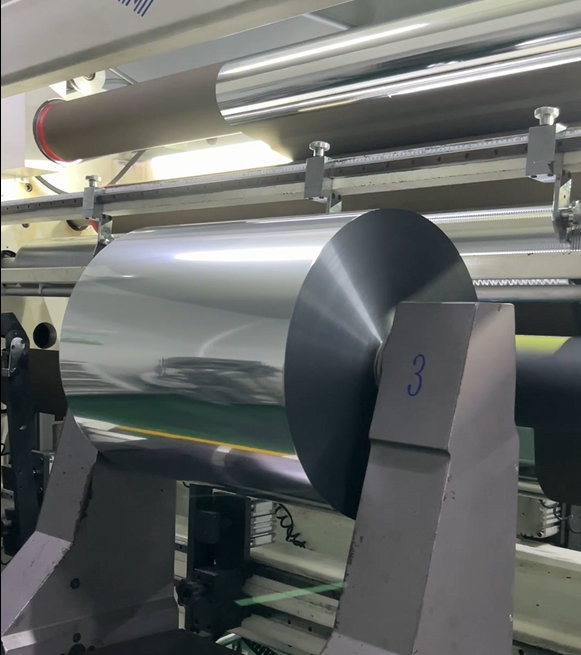
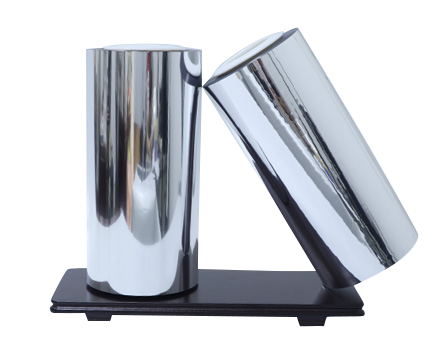
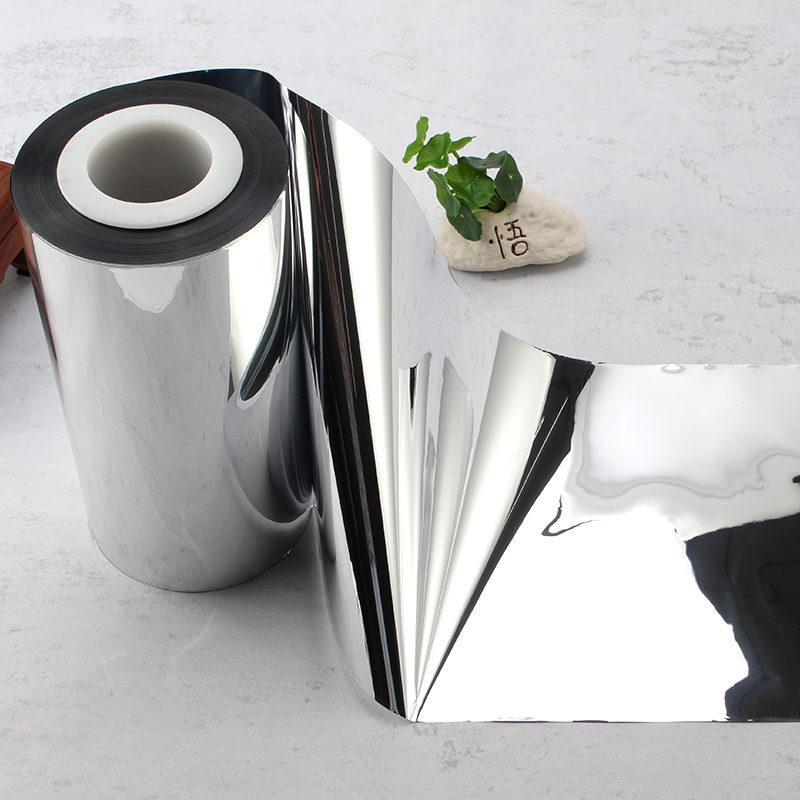
Copper has long been the gold standard for electrical and thermal conductivity. Yet, solid copper foils are heavy, rigid, and costly—especially when thickness exceeds 35 µm. As devices become thinner and more portable, and as electric vehicles demand lighter battery packs, the limitations of bulk copper become glaring. Enter Copper Metallized Film—a hybrid that retains copper’s conductive prowess but sheds the weight and stiffness. By depositing a 99.99% pure copper layer onto a durable PET base via Physical Vapor Deposition (PVD), manufacturers now offer a material that bends, spirals, and adheres where solid foils cannot.
2. What Makes Copper Metallized PET Film Unique?
The PVD Advantage
Unlike electroplating or lamination, PVD (vacuum deposition) creates a molecular‑level bond between copper and PET. The process takes place in a high‑vacuum chamber, where copper evaporates and condenses onto the moving film, producing a pin‑hole‑free, uniform coating. This Vacuum Metallized Copper Film exhibits exceptional consistency: sheet resistance is controlled within a tight tolerance of −1.8% to +3.2% across the entire roll. Such uniformity is critical for high‑frequency circuits and precision sensors.
Lightweight but Unyielding
At just 23 µm total thickness (copper layer + substrate), this Copper Coated Film weighs only 33 g/m²—roughly one‑third the weight of a 35 µm copper foil. Despite its feathery build, it delivers a tensile strength exceeding 220 MPa and elongation over 100%, meaning it can wrap around small‑diameter cylinders without cracking. Add heat resistance up to 120°C, and you have a material that survives reflow soldering and under‑hood automotive environments.
3. Unmatched Electrical Performance – The 0.3Ω/□ Benchmark
The most critical metric for any conductive film is sheet resistance. Copper Metallized Film achieves 0.3Ω/□, a value that rivals thin rolled copper foils. This low resistance ensures minimal ohmic losses, making it ideal for power distribution in flexible circuits and for effective EMI attenuation. In fact, at frequencies above 10 MHz, this Metallized Copper Film provides shielding effectiveness exceeding 60 dB, outperforming many aluminium‑based alternatives. For designers of 5G antennas and high‑speed digital interconnects, the stable, low‑resistivity copper layer guarantees signal integrity over the product’s lifetime.
4. Key Applications Driving Demand for Copper Metallized Film
4.1 EMI Shielding in Dense Electronics
With the proliferation of wireless communication, electromagnetic interference has become a silent killer of performance. Copper Metallized PET Film serves as an ultra‑thin, flexible shield that can be laminated inside device housings or wrapped around cable bundles. Its high conductivity reflects and absorbs stray radiation, protecting sensitive ICs and ensuring compliance with EMC regulations. Unlike rigid metal cans, this Copper Film conforms to irregular surfaces, saving precious internal space.
4.2 Flexible Printed Circuit Boards (FPCBs) – The Heart of Foldable Devices
The rise of foldable phones, wearable health monitors, and curved displays has created an insatiable appetite for flexible circuitry. Copper Coated PET Film is the preferred substrate for single‑ and double‑sided FPCBs because it withstands repeated bending (over 100,000 flex cycles) without losing conductivity. Its excellent adhesion (peel strength ≥5.0 N/15mm) ensures that traces remain anchored even during dynamic flexing. Moreover, the PET base offers good dielectric properties, enabling high‑density routing.
4.3 Next‑Generation Battery Current Collectors – The Weight Game
Perhaps the most disruptive application is in lithium‑ion batteries. Replacing conventional copper foil with Copper Metallized Film as a current collector can slash weight by up to 73% and thickness by 33%, directly boosting gravimetric energy density. Several cell manufacturers have reported energy density gains of 10–15% when using metallized polymer collectors. Additionally, the PET layer acts as a built‑in safety fuse—under thermal runaway, it melts and interrupts current, enhancing cell safety. With global EV sales soaring, demand for Copper Film for Batteries is projected to grow at a CAGR of over 20% in the next five years.
4.4 Anti‑Counterfeit Labels and RFID Antennas
The distinctive metallic sheen and electrical conductivity make Metallized Copper Film a natural choice for tamper‑evident labels and RFID inlays. The copper layer can be etched to form custom antenna patterns, while the PET carrier provides tear resistance. Brand owners appreciate the dual function: visual authentication plus reliable RFID communication.
4.5 Thermal Management and Heat Spreading
Though often overlooked, copper’s high thermal conductivity (≈400 W/m·K) helps spread heat laterally across the film. When bonded to heat‑generating components, Copper Metallized Polyester Film acts as a planar heat spreader, reducing hot spots in compact LED lighting and power modules.
5. Metallized Copper Film vs. Alternatives – A Clear Winner
| Feature | Copper Metallized Film | Solid Copper Foil (35 µm) | Aluminium Metallized Film |
|---|---|---|---|
| Sheet Resistance (Ω/□) | 0.3 | 0.15–0.25 | ~1.8 |
| Areal Weight (g/m²) | 33 | ~310 | ~16 |
| Flexibility | Excellent | Poor | Good |
| Solderability | Good (with surface treatment) | Excellent | Poor |
| EMI Shielding (≥10 MHz) | Excellent | Excellent | Moderate |
| Cost per m² | Moderate | High | Low |
While aluminium films are lighter, their much higher sheet resistance makes them unsuitable for high‑current or high‑frequency applications. Solid copper foil offers slightly lower resistance but at the penalty of weight and inflexibility. Copper Metallized Film strikes the optimal balance, offering near‑copper performance with polymer agility.
6. Market Momentum – Where Is Copper Coated PET Film Headed?
The global market for Copper Coated Films was valued at approximately USD 3.2 billion in 2025 and is forecast to reach USD 4.77 billion by 2036, driven by robust adoption in automotive electronics, consumer wearables, and 5G infrastructure. The copper metal mesh film segment alone is expected to hit USD 460 million in 2025, reflecting a 16% year‑on‑year surge. Asia‑Pacific currently dominates production, with China, Japan, and South Korea housing major PVD coating lines. However, Europe and North America are ramping up local capacity to meet EV battery supply chain requirements.
Industry experts point to two megatrends: electrification and miniaturisation. As battery packs become thinner and electronic modules denser, the unique value proposition of PVD Copper Film becomes even more compelling. Manufacturers are also investing in post‑treatment technologies (e.g., anti‑tarnish coatings, adhesive backings) to broaden the application window.
7. Practical Considerations for Design Engineers
When specifying Copper Metallized Film, consider the following:
-
Copper thickness: Typically 200–500 nm, but customised for specific resistance targets.
-
Adhesive options: Some grades come with pressure‑sensitive adhesive for easy lamination.
-
Surface finish: Plain copper can oxidise; many suppliers offer passivated or tin‑plated versions.
-
Width and roll length: Available in widths up to 1500 mm for high‑volume converting.
It is also advisable to test flex endurance if the film will undergo dynamic bending, and to validate adhesion after soldering or thermal cycling—though most high‑quality Metallized Copper Film grades are engineered to pass IPC‑6012 standards.
8. Conclusion – Embrace the Copper Metallized Film Revolution
The electronics industry no longer has to choose between conductivity and flexibility. Copper Metallized Film delivers both—and more. It reduces weight, enhances design freedom, simplifies assembly, and often lowers total system cost by eliminating heavy connectors and stiffening frames. Whether you are designing a slim‑profile smartphone, a high‑power EV battery, or a robust EMI shield, this Copper Metallized PET Film offers a proven, scalable solution.
As PVD technology advances and roll‑to‑roll coating efficiencies improve, the cost gap with traditional foils continues to narrow. Now is the time to re‑evaluate your material choices and join the growing community of engineers who have switched to Copper Coated Film. The future is flexible, conductive, and remarkably light—and it is made of copper metallized film.
Comment