BOPP Metallized Film: The High-Barrier, Mono-Material Solution Reshaping Sustainable Packaging
Jul 25,2026 | FOSHAN CAILONG METALLIC PACKAGING MATERIAL CO.,LTD
Abstract
The global packaging industry is at a pivotal moment, driven by regulatory mandates, consumer demand for sustainability, and the need for high-performance materials. BOPP metallized film has emerged as a cornerstone solution, with the global market projected to expand from USD 7.74 billion in 2025 to USD 13.1 billion by 2034. Guangdong Cailong's high barrier BOPP metallized film delivers exceptional oxygen and moisture barrier properties (OTR 0.12 cc/m²·24h, WVTR 0.28 g/m²·24h) while enabling fully recyclable mono-material packaging—a critical advantage as the EU Packaging and Packaging Waste Regulation (PPWR) drives 100% recyclable packaging goals through 2035. This BOPP metallized film offers up to 58% cost savings versus aluminum foil, superior processability, and versatile applications across food, pharmaceutical, and cosmetic packaging. As only ~5% of legacy multi-layer flexibles are currently recycled, the shift to mono-material BOPP metallized film represents one of the most significant transformations in packaging history.
Introduction: The BOPP Metallized Film Market on a Growth Trajectory
The numbers tell a compelling story. The global metalized biaxially oriented polypropylene (BOPP) films market reached approximately USD 7.74 billion in 2025, with projections indicating it will climb to USD 13.1 billion by 2034—a compound annual growth rate of 6.05%. Metallized BOPP film is the largest segment in the metallized rollstock film market, commanding over 45% share. What's driving this remarkable growth? The answer lies in a convergence of factors: tightening sustainability regulations, the escalating cost of traditional materials, and the relentless demand for packaging that delivers both performance and environmental responsibility.
Asia-Pacific currently leads both market share and growth, with India and China fueling increasing adoption. Europe is emerging as a fast-growing region, supported by stringent recyclability regulations and sustainable packaging initiatives. The BOPP film market as a whole is valued at USD 28.2 billion in 2025 and is projected to grow at a 7% CAGR to reach USD 51.6 billion by 2034. Within this expansive market, BOPP metallized film stands out as a high-value segment addressing the most critical packaging challenges of our time.
Why BOPP Metallized Film Is Replacing Traditional Materials
The Cost Advantage: Up to 58% Savings vs. Aluminum Foil
One of the most compelling reasons for the rapid adoption of BOPP metallized film is its significant cost advantage over traditional aluminum foil. Industry analysis shows that metallized films offer up to a 58% cost saving compared to 0.00035" foil. This cost advantage extends across material costs, production costs, and reduced inventory requirements due to shorter lead times. When you factor in yield improvements—metallized film delivers more square inches per pound than foil—the economic case becomes even more persuasive.
Beyond raw material costs, BOPP metallized film demonstrates superior processing characteristics on packaging lines. Unlike aluminum foil, which is prone to flex cracking and pin-holing, metallized BOPP film offers flex-crack resistance, puncture-resistance, and gas-barrier durability equal to or better than foil. It runs exceptionally well on pouch lines and provides aesthetic and economic benefits that make it an increasingly attractive alternative.
The Sustainability Imperative: Mono-Material Recyclability
Perhaps the most transformative advantage of BOPP metallized film is its role in enabling mono-material recyclable packaging. Traditional multi-layer flexible packaging—which combines materials like PET, aluminum foil, and various sealants—poses enormous recycling challenges. Currently, only ~5% of legacy multi-layer flexibles are recycled. These complex structures cannot be easily separated, and they contaminate recycling streams.
BOPP metallized film changes this paradigm. As a mono-material solution, it can be recycled through standard polypropylene mechanical recycling infrastructure: shredding, washing, extrusion, and pelletizing. When laminated to other BOPP films, it maintains mono-material integrity. This recyclability unlocks access to curbside and drop-off recycling streams, dramatically improving recovery rates and reducing packaging waste.
The regulatory landscape is accelerating this shift. The EU Packaging and Packaging Waste Regulation (PPWR), plastic taxes, and Extended Producer Responsibility (EPR) fees are driving 100% recyclable packaging goals for 2026–2035 roadmaps. Major brands including Unilever, Nestlé, Mars, P&G, and Colgate have pledged 100% recycle-ready packaging. Retailers such as Tesco and Carrefour, along with industry initiatives like CEFLEX, are actively favoring PE/PP mono-material webs. BOPP metallized film enables compliance with these mandates while maintaining the high barrier performance that products demand.
Technical Excellence: The Performance of Guangdong Cailong's BOPP Metallized Film
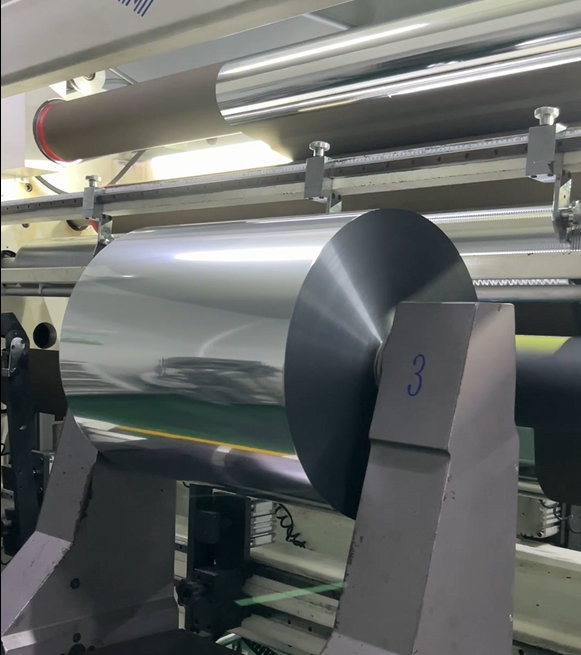
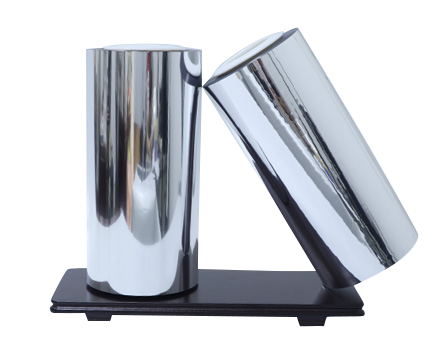
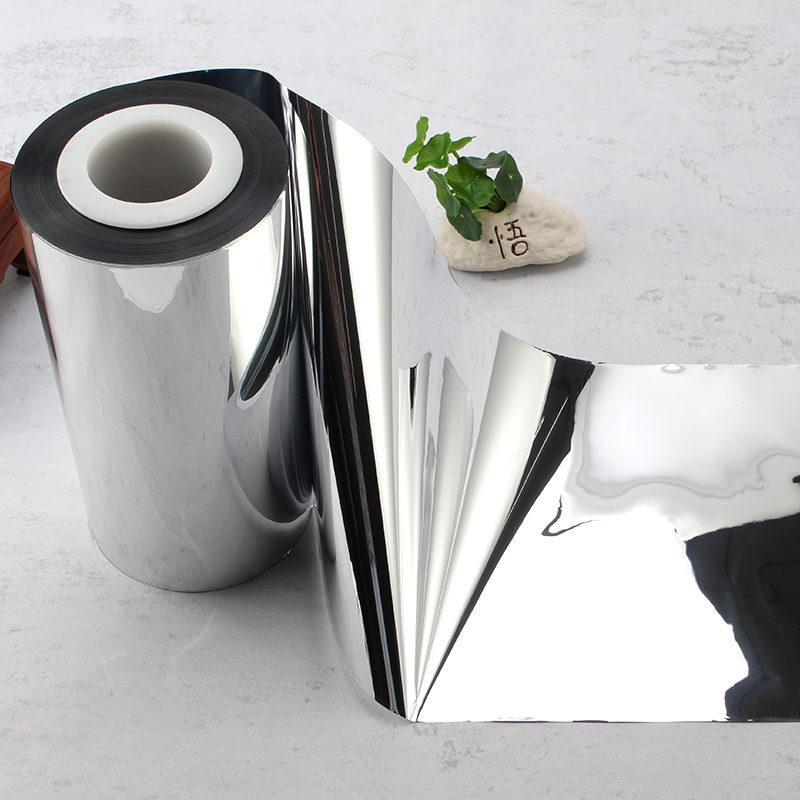
Guangdong Cailong's high barrier BOPP metallized film represents the state of the art in metallized film technology. Produced through vacuum metallization—depositing aluminum onto BOPP substrate—this VMBOPP film delivers outstanding barrier properties that rival or exceed those of traditional multi-material structures.
The film's oxygen transmission rate (OTR) of 0.12 cc/m²·24h and water vapor transmission rate (WVTR) of 0.28 g/m²·24h make it ideal for protecting oxygen-sensitive and moisture-sensitive products. With a thickness of 18μm, optical density of 2.3, and aluminum layer resistance of 1.2 Ω/□, Guangdong Cailong's BOPP metallized film provides robust, consistent barrier performance.
The aluminum layer adhesion of 3.5 N/15mm (EAA method) ensures reliable bonding with other materials in lamination processes. Tensile strength of 97 MPa in the machine direction and 250 MPa in the transverse direction, combined with excellent thermal shrinkage properties (1.83% MD, 0.87% TD at 120°C/2 minutes), guarantee dimensional stability during converting and end-use applications.
What sets Guangdong Cailong's BOPP metallized film apart is its combination of high barrier performance with mono-material recyclability. This BOPP metallized film can replace VMPET or aluminum foil in three-layer structures, serving as the middle layer to create homogeneous composite materials. The result is packaging that delivers the barrier protection of traditional multi-layer structures but can be recycled as a single material stream—a genuine breakthrough in sustainable packaging.
Applications Across Industries
Food & Beverage Packaging
BOPP metallized film is extensively used in flexible food packaging applications. The metallization process enhances the film's barrier performance, making it suitable for packaging snacks, confectionery, coffee, tea, powdered drinks, baked goods, and prepared meals. The film's moisture barrier properties and heat resistance make it ideal for protecting dry foods, while its visual appeal—a metallic finish that conveys quality and freshness—enhances shelf presence.
Pharmaceutical Packaging
In the pharmaceutical industry, products must be guarded from light, moisture, and oxygen. BOPP metallized film provides the high barrier protection required for packaging tablets, powders, capsules, and other drug products. The growing demand for high-barrier packaging solutions in the pharmaceutical sector is driving the BOPP metallized film market.
Cosmetics & Personal Care
BOPP metallized film is widely used in cosmetic and personal care packaging, including face masks, perfumes, shower gels, and liquid detergents. The film's premium metallic appearance enhances brand perception while its barrier properties protect sensitive formulations from degradation.
Labels & Decorative Applications
Metallized BOPP film serves as facestocks for pressure-sensitive labels in food, beverage, home and personal care, and healthcare markets. The film's printability and aesthetic appeal make it ideal for high-end labeling applications.
The Recycling Advantage: How BOPP Metallized Film Supports Circularity
Understanding the recycling process is essential to appreciating the sustainability value of BOPP metallized film. BOPP film is polypropylene, and it recycles through the same mechanical recycling infrastructure used for other polypropylene scrap. The process involves several key steps:
-
Collection and Sorting: BOPP scrap from converting operations, printing jobs, and packaging lines is collected and sorted by type.
-
Shredding: The film is shredded into smaller pieces to facilitate processing.
-
Washing: Contaminants including inks and adhesives are removed.
-
Extrusion: The cleaned material is melted and extruded.
-
Pelletizing: The extruded material is formed into pellets for reuse in manufacturing.
Clean, unprinted BOPP trim from converting operations represents the highest-value scrap, producing the cleanest recycled PP resin. While printed BOPP adds ink contamination and metallized BOPP introduces aluminum, mono-material BOPP structures are significantly easier to recycle than multi-layer laminates. The quality of recycled BOPP resin depends entirely on feedstock quality—clean input produces clean pellets.
BOPP metallized film supports circular packaging initiatives by simplifying recycling processes. As the industry moves toward "recyclable-in-practice" mandates by 2030, mono-material solutions like BOPP metallized film will become increasingly essential.
Looking Ahead: The Future of BOPP Metallized Film
The trajectory for BOPP metallized film is unmistakably upward. Key trends shaping the market include increasing use of high-barrier BOPP films, rising demand for lightweight flexible packaging, growing adoption of metallized BOPP films, and expansion of high-speed film extrusion technologies.
Technological advancements continue to enhance performance. Ultra-high barrier BOPP films are being developed to meet the high demands of the long shelf-life food sector. These advanced films enable mono-material packaging solutions that offer a sustainable alternative to traditional multi-material structures. Transparent high-barrier AlOx coated films are also emerging, offering exceptional clarity combined with extreme barrier performance for eco-friendly packaging.
Regulatory drivers will continue to accelerate adoption. The PPWR's delegated acts for recyclability criteria are due by January 2028, with implementing acts for recyclability methodology and scale definitions to follow. Retailer-led specifications are tightening ahead of regulation, and the PPWR's "recyclable-in-practice" mandate takes effect by 2030.
Conclusion
BOPP metallized film represents the intersection of performance, sustainability, and economic viability in modern packaging. Guangdong Cailong's high barrier BOPP metallized film delivers exceptional barrier properties, superior processability, and mono-material recyclability—addressing the three critical requirements of today's packaging industry.
With the global market projected to reach $13.1 billion by 2034, BOPP metallized film is not just a trend—it's the future of flexible packaging. For brands seeking to meet sustainability mandates, reduce costs, and maintain product quality, BOPP metallized film offers a proven solution that delivers on all fronts.
As the packaging industry continues its transformation toward circularity, Guangdong Cailong's BOPP metallized film stands ready to help manufacturers create packaging that protects products, satisfies consumers, and preserves the planet for future generations.
Comment